


Table of Content
Before buying almost anything, most of us do one thing first: we research. Whether it is a skincare product, a smartphone, a laptop or even an online course, we rarely decide after seeing just one advertisement. Instead, we search for reviews, compare alternatives, watch “unsponsored” reviews on YouTube or even ask ChatGPT whether it is worth buying.
Interestingly, the questions we ask depend on the product. For skincare, we want to know whether it suits our skin type and actually solves the concern it claims to address. For smartphones, we compare cameras, battery life, performance and durability. Different products lead to different questions, but the intention remains the same. We are trying to reduce uncertainty before spending our money.
That raises an interesting question. Why do some brands earn our trust almost instantly while others make us double-check everything before clicking "Buy Now"? The answer lies in how they shape every part of the customer experience. For decades, marketers have used the 7Ps of Marketing Mix to understand exactly how those experiences are created.
The Psychology Behind Every Purchase
People often believe they buy products because of the features. In reality, we buy because of what those features help us achieve. A moisturiser isn't just about hydration; it is about feeling confident in your skin. A premium laptop isn't simply faster; it is about trusting that it won't let you down during important work.
Whether we realise it or not, every purchase is influenced by a few basic questions: Can I trust this brand? Is it worth the price? Will it solve my problem? The businesses that answer these questions consistently are usually the ones customers return to again and again.
This is also why the 7Ps of Marketing Mix have remained relevant for decades. Marketing channels have evolved from newspapers to AI-powered recommendations, but customer psychology hasn't changed nearly as much. People still look for trust, value, convenience and confidence before making a decision. The 7Ps simply provide a framework to understand and design experiences around those expectations.
Understanding the 7Ps of the Marketing Mix
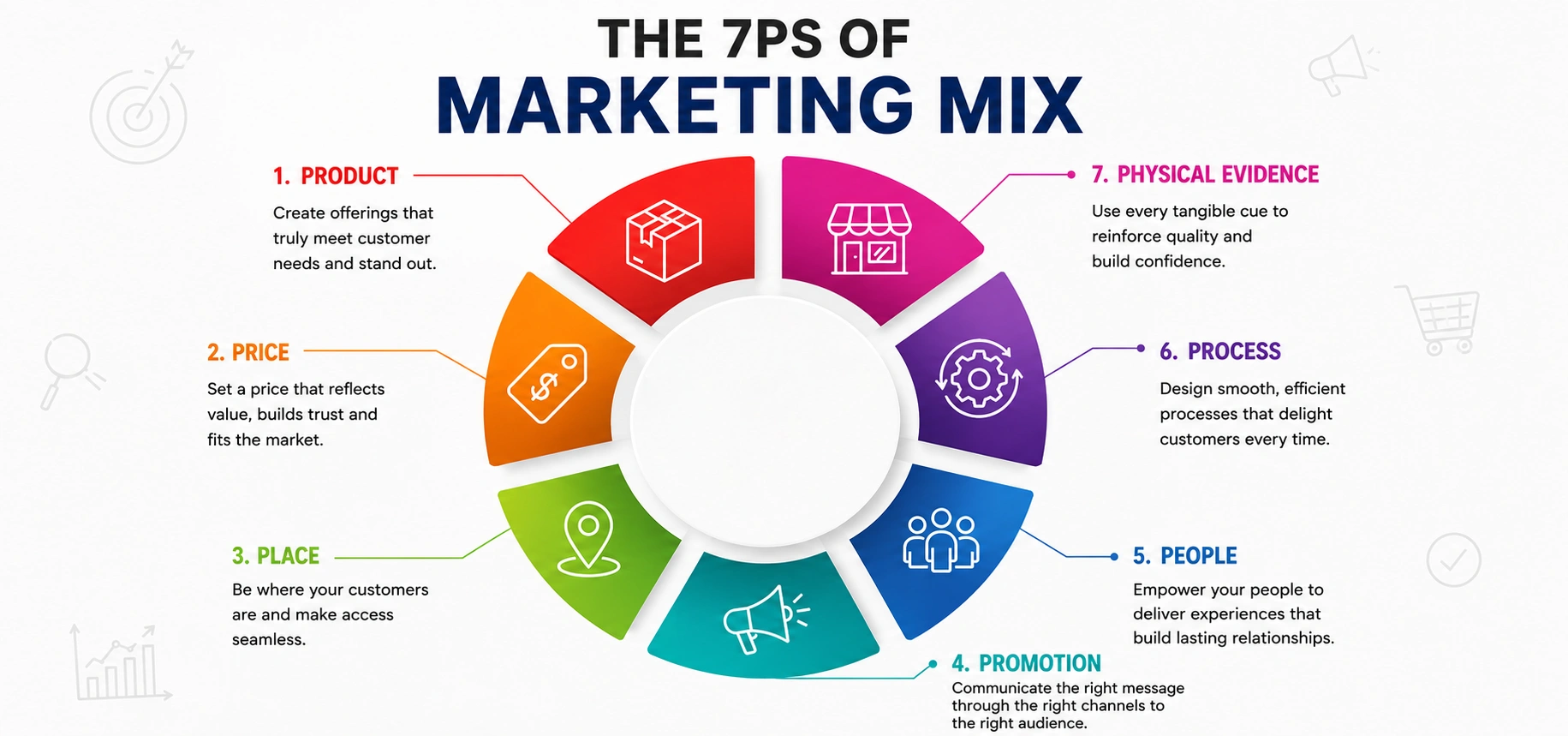
1. Product: It Begins with Solving the Right Problem
Customers don't buy products simply because they exist; they buy them because they solve a problem. A smartwatch isn't just a gadget; it is a tool for someone trying to live a healthier lifestyle. Noise-cancelling headphones aren't only about technology; they are about helping people focus in a noisy world.
This is where many businesses make a mistake. They focus on adding more features instead of asking whether those features genuinely improve the customer's life. The strongest products aren't always the ones with the longest specification sheet; they are the ones that solve a real problem better than the alternatives.
2. Price: You are Also Pricing Perception
Price is more than just a number. It shapes how customers perceive a product before they even use it. Premium brands often charge more because higher prices can signal quality, exclusivity or reliability, while value-focused brands compete by making products more accessible.
Customers rarely ask whether something is expensive. Instead, they ask whether it feels worth the money. A good pricing strategy isn't about being the cheapest or the most expensive; it is about ensuring the value customers perceive matches the price they are expected to pay.
3. Place: Convenience Is Part of the Product
Years ago, "place" referred to where a product was sold. Today, it includes websites, mobile apps, online marketplaces, delivery services and even how easily customers can discover a product through search engines.
Think about Amazon. Its success isn't built only on competitive pricing but also on convenience. Fast delivery, simple returns, secure payments and an easy-to-use platform remove friction from the buying journey. Customers may not consciously appreciate convenience, but they immediately notice when it is missing.
4. Promotion: You are Selling More Than a Product
Promotion is often mistaken for advertising, but it is much broader than that. It includes every message a business shares through advertisements, social media, email campaigns, public relations, influencer collaborations and even customer reviews.
The most memorable brands don't simply talk about product features. Nike rarely focuses on shoes; it talks about determination. Apple doesn't begin with processors; it talks about creativity. The product matters, but it is the story around the product that creates an emotional connection and makes people remember the brand.
5. People: Every Brand Is Experienced Through People
No matter how digital a business becomes, customers still interact with people. It could be a salesperson answering questions, a customer support executive resolving an issue or even a delivery partner making the final handoff. These interactions often shape a customer's opinion far more than an advertisement ever could.
Think about the last time you received exceptional service at a restaurant or had a customer support representative solve your problem quickly. Chances are, you remembered the experience long after you forgot the conversation itself. That is because people don't just deliver a service; they represent the brand.
For businesses, this means hiring, training and empowering employees isn't just an HR activity. It is a marketing decision. Every positive interaction strengthens trust, while a poor one can undo months of carefully planned marketing efforts.
6. Process: The Experience Behind the Product
Customers don't just buy a product; they experience the journey of buying it. From placing an order and making a payment to receiving the product and getting after-sales support, every step influences how they feel about the brand.
When these processes work smoothly, customers hardly notice them. But the moment something goes wrong, a failed payment, delayed delivery or confusing return policy, the experience quickly becomes frustrating. Often, it is not the product that disappoints customers; it is the process surrounding it.
This is why businesses invest heavily in creating simple, consistent and reliable customer journeys. A smooth process doesn't just improve satisfaction; it encourages customers to return.
7. Physical Evidence: Trust Begins Before the Product Does
Before customers use a product, they experience everything around it. They browse the website, read reviews, look at the packaging, visit the store or interact with the mobile app. These details quietly influence whether a brand feels trustworthy.
Imagine two cafes serving equally good coffee. One has clean interiors, friendly staff and thoughtfully designed menus, while the other feels poorly maintained and disorganised. Even before taking their first sip, most people have already formed an opinion.
Physical evidence isn't about appearances alone. It is about creating confidence that the business is professional, reliable and capable of delivering what it promises.
The Interesting Part Is... Customers Never Think About the 7Ps
Here is what makes the 7Ps of Marketing Mix so interesting. Customers rarely think, "This company has a great pricing strategy" or "Their processes are excellent." Instead, they simply feel that buying from the brand was easy, trustworthy and worth the money.
That is because the seven Ps don't work independently. A great product can still fail if it is priced poorly. An excellent promotion won't help if the buying process is frustrating. Likewise, exceptional customer service can't completely compensate for a product that doesn't solve the right problem.
Even today, in an era of AI-powered recommendations, personalized marketing and digital platforms, this idea remains unchanged. Technology has transformed how businesses reach customers, but it hasn't changed why customers choose one brand over another. They still look for trust, value, convenience and confidence before making a purchase.
That is why the 7Ps continue to be relevant. They aren't a formula that guarantees success, nor do they cover every aspect of modern marketing. Instead, they provide a practical way to understand the decisions that quietly influence how customers experience a brand.
Conclusion
The 7Ps of Marketing are more than seven marketing terms; they are seven ways of understanding how customers experience a business. Every decision, from the product you create to the way you price, promote, deliver and support it, contributes to the impression customers carry with them.
While marketing tools will continue to evolve, the fundamentals of human behaviour remain remarkably consistent. People still choose brands they trust, remember and enjoy interacting with. That is exactly why this concept remains one of the most valuable frameworks for understanding effective marketing, even decades after they were first introduced.