

In the rapidly evolving landscape of education, the integration of cutting-edge technologies is revolutionizing the way we teach and learn. At the forefront of this transformation lies the emergence of Artificial Intelligence (AI) and AI-powered learning environments, which are poised to reshape the educational experience as we know it.
AI-powered learning environments create dynamic, personalized, and immersive experiences tailored to each student's unique needs and capabilities. One of the key advantages of AI-powered learning environments is their ability to analyse vast amounts of data, including student performance, engagement levels, and learning preferences. By leveraging this data, AI algorithms can identify areas of strength and weakness, pinpoint knowledge gaps, and suggest targeted interventions to enhance understanding and retention.
Key Advantages of AI for Students
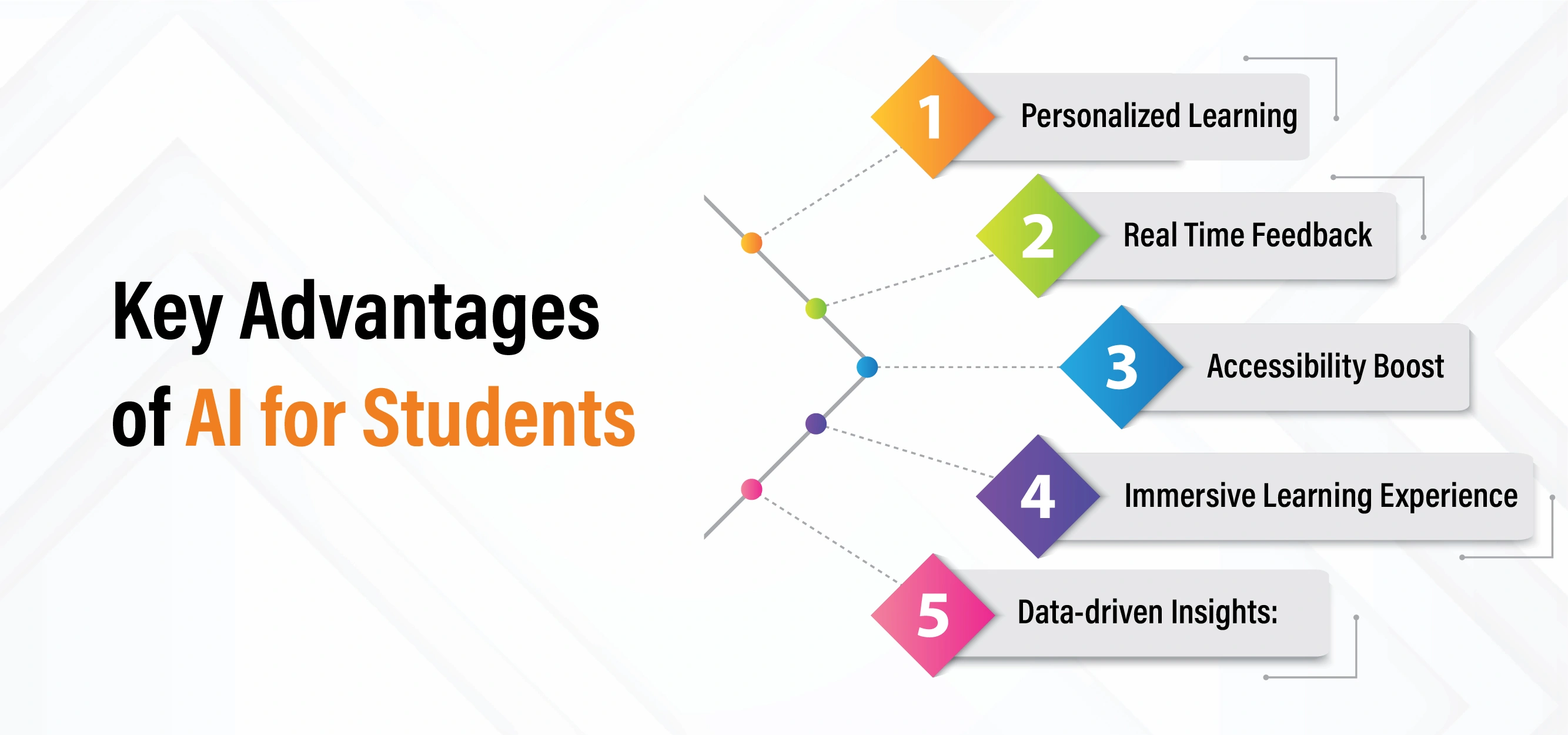
- Personalized Learning: AI can tailor your study material to your individual strengths and weaknesses, letting you learn at your own pace.
- Real Time Feedback: Get instant feedback on assignments and quizzes, helping you identify areas for improvement.
- Accessibility Boost: AI tools can translate languages, provide closed captions, and offer alternative learning methods, making education more accessible for everyone.
- Immersive Learning Experience: AI-enabled technologies like Virtual Reality (VR) and Augmented Reality (AR) can create immersive simulations and interactive scenarios, allowing students to visualize and interact with complex concepts in a practical and engaging manner.
- Data-driven Insights: AI can analyse vast amounts of student data, providing educators with valuable insights on learning behaviours, performance trends, and areas for improvement.
Some Major Benefits of AI for Educators
- Smart Content Curation: AI can assist in curating relevant and engaging educational content from various sources, saving educators’ valuable time and efforts in lesson preparation.
- Intelligent Grading and Feedback: AI-powered systems can automate grading processes, provide detailed feedback on assignments and identify areas where students may need additional support, reducing the workload for educators.
- Identifying Student Needs: AI algorithms can analyse student data to identify learning disabilities, cognitive strengths and weaknesses and socio-emotional needs, enabling educators to provide targeted support and interventions.
- Enhancing Virtual & Blended Learning: AI-powered virtual assistants, chatbots, and interactive simulations can enrich virtual and blended learning experiences, providing students with personalized support and immersive learning opportunities.
Brands that Converge AI and Education
Carnegie Learning
This company leverages AI to create adaptive learning platforms for Math, English literacy, and world languages. Their AI analyzes student performances and personalizes instruction, helping them develop a deeper understanding of the study material.
Squirrel AI
This China-based company is a leader in AI-powered adaptive education. Their platform uses a vast student database to train its AI, creating customized lessons for each student.
Memrise Learning
This language learning app incorporates AI to make learning more effective and engaging. The Memrise learning framework utilizes a spaced repetition system, which means that as you complete lessons, you’ll be introduced to a word or phrase for the first time, and then seconds later, you’ll be asked to recall it. This is repeated for minutes later, and then days later.
Century Tech
This platform utilizes AI to personalize learning paths for students of all ages. It employs Machine Learning and Neuroscience to identify knowledge gaps and adjust the pace and content of learning for each individual.
Cybersecurity in the Digital Age: Harnessing the Power of Artificial Intelligence
In today's interconnected world, where data is the new currency and cyber threats lurk around every digital corner, the importance of robust cybersecurity measures cannot be overstated. As the complexity and volume of cyber attacks continue to escalate, traditional security measures are often outpaced by the ever-evolving tactics of malicious actors. This is where Artificial Intelligence (AI) comes in with a game-changing technology that is revolutionizing the way we approach cybersecurity.
AI is rapidly becoming an indispensable ally in the fight against cyber crime, offering unprecedented capabilities in threat detection, response, and prevention.
By harnessing the power of Machine Learning algorithms and Advanced Analytics, AI-powered cybersecurity solutions can process vast amounts of data, identify patterns and anomalies, and rapidly detect and mitigate potential threats.
Key Advantages of AI for Students (in Cybersecurity context)
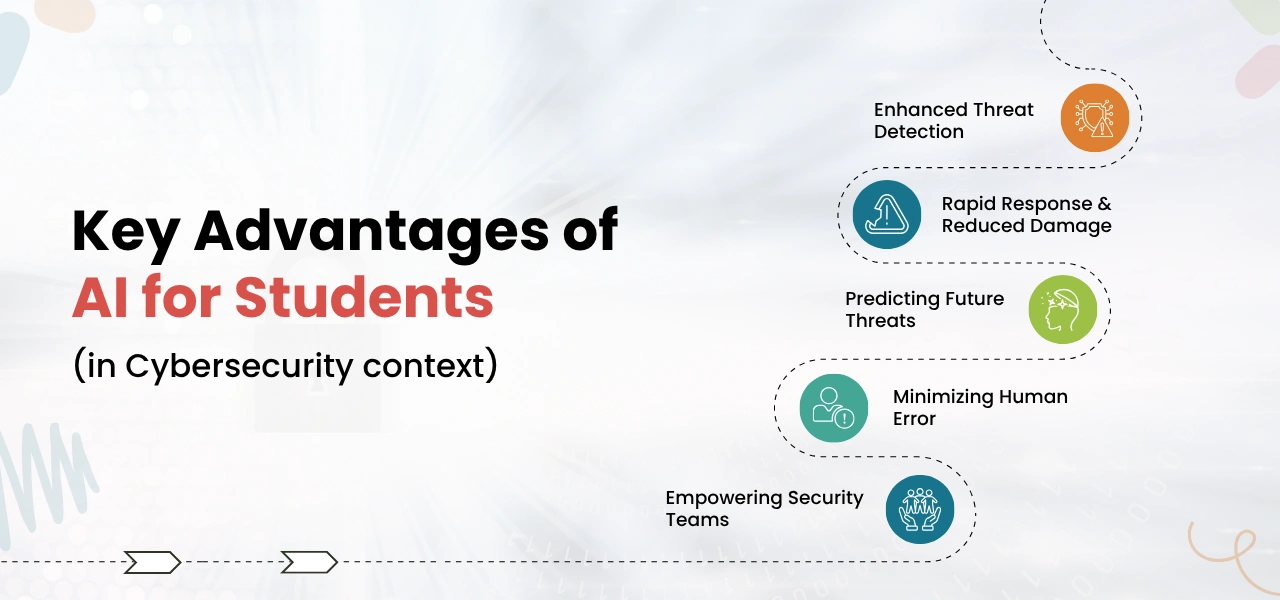
- Enhanced Threat Detection: AI analyzes massive data streams to identify suspicious activity and potential breaches in real time, acting as a tireless security guard that never misses a beat.
- Rapid Response & Reduced Damage: AI’s lightning-fast analysis enables quicker response times to cyber attacks, minimizing damage and downtime for your systems.
- Predicting Future Threats: By learning from past attacks and system behavior, AI can predict future threats and vulnerabilities before they strike, giving you a crucial headstart.
- Minimizing Human Error: Automating routine security tasks like log analysis and threat monitoring reduces the risk of human error, a major contributor to security breaches.
- Empowering Security Teams: AI frees up cybersecurity professionals by handling repetitive tasks. This allows them to focus on more strategic initiatives like incident response, threat hunting, and developing robust security strategies.
Brands Leveraging AI to Improve Cybersecurity
CrowdStrike
This leader in cloud-native endpoint protection leverages AI in its Falcon platform. It proactively hunts for threats across devices, analyzes them automatically, and even takes steps to contain them.
Darktrace
This brand uses AI to detect and respond to cyber attacks in real-time. Their technology focuses on understanding ‘normal’ behavior within a network and identifying anomalies that might indicate a breach.
McAfee
This cybersecurity giant integrates AI into various solutions. Their Machine Learning Threat Prevention (MLTP) engine uses AI to detect and block zero-day threats and malware in real time.
Palo Alto Networks
This brand utilizes AI in its threat intelligence platform, analyzes data from various sources and uses AI to correlate events, identify threats, and automate incident response.
Fortinet
A major player in cybersecurity solutions, Fortinet incorporates AI across various offerings. Their FortiGuard utilizes AI to identify and block malware, while FortiSIEM leverages AI for security information and event management, providing insights on potential threats.