

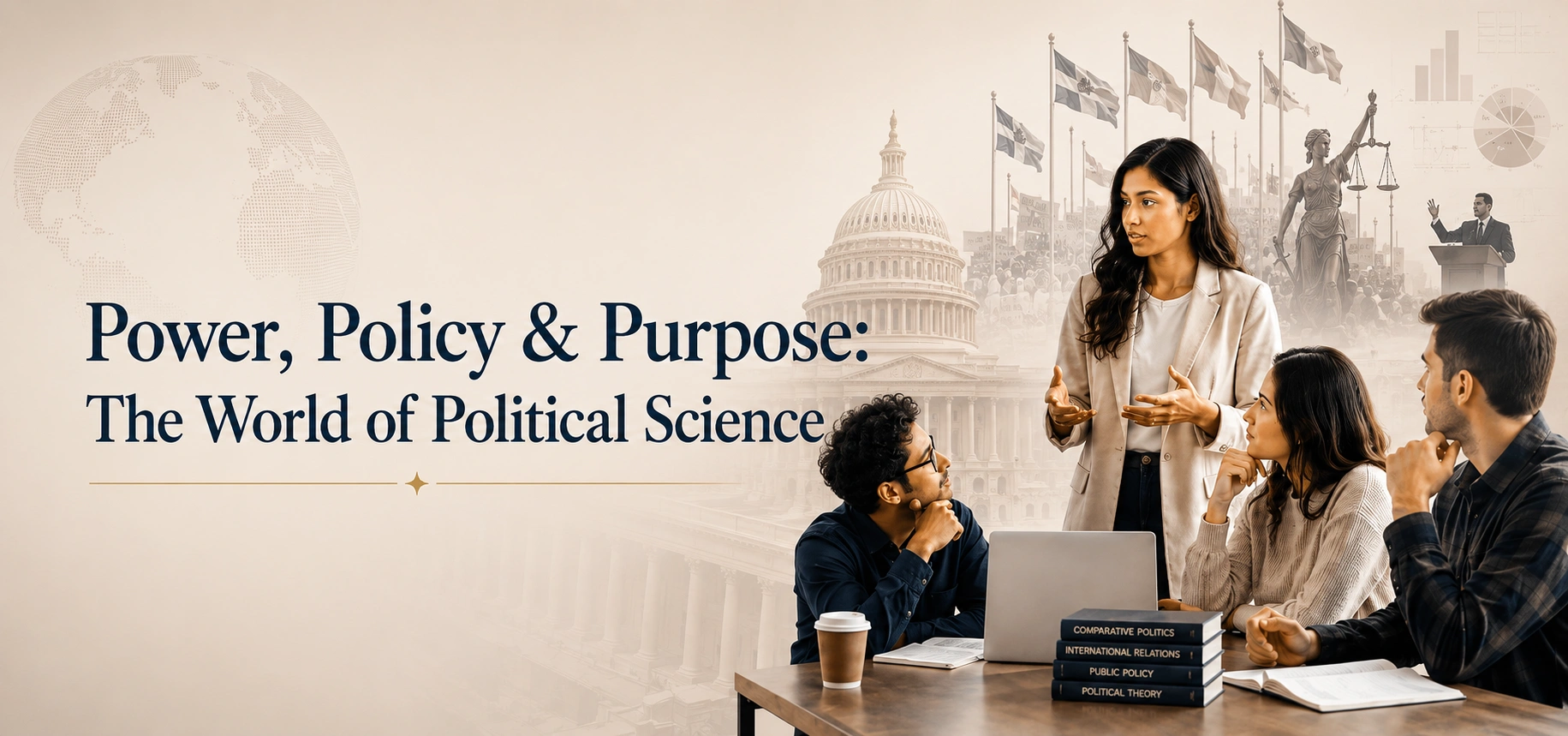
Have you ever wondered who makes the decisions that determine the political direction of our country? And what goes into making those decisions? Why do some policies lead to growth and stability, while others face criticism or fail to deliver? How do political systems ensure that decisions reach such diverse populations effectively?
In an increasingly interconnected world, understanding these questions is becoming more important than ever. It is no longer enough to stay up to date with current affairs simply; there is growing value in analysing the systems, institutions, and ideas that drive these developments.
This is where Political Science comes into focus. It is not just the study of politics, but a structured way to understand governance, public policy, and global relations. For students and professionals alike, it also opens up diverse academic pathways and career opportunities in today's evolving landscape.
What Is Political Science?
Political Science is the study of governance, political systems, public policies, and the behaviour of individuals and institutions within a state. It seeks to explain how power is distributed, how decisions are made, and how those decisions impact society.
Rather than focusing solely on political events, it explores the underlying frameworks that shape them, including constitutions, legal systems, political ideologies, and administrative structures.
That shift from passive observer to critical analyst is at the heart of what a Political Science education offers.
Core Subjects in Political Science
Political Science is a multidisciplinary field that covers a wide range of subjects. Each area provides a different perspective on how political systems function, and together, they build a comprehensive understanding of governance at every level.
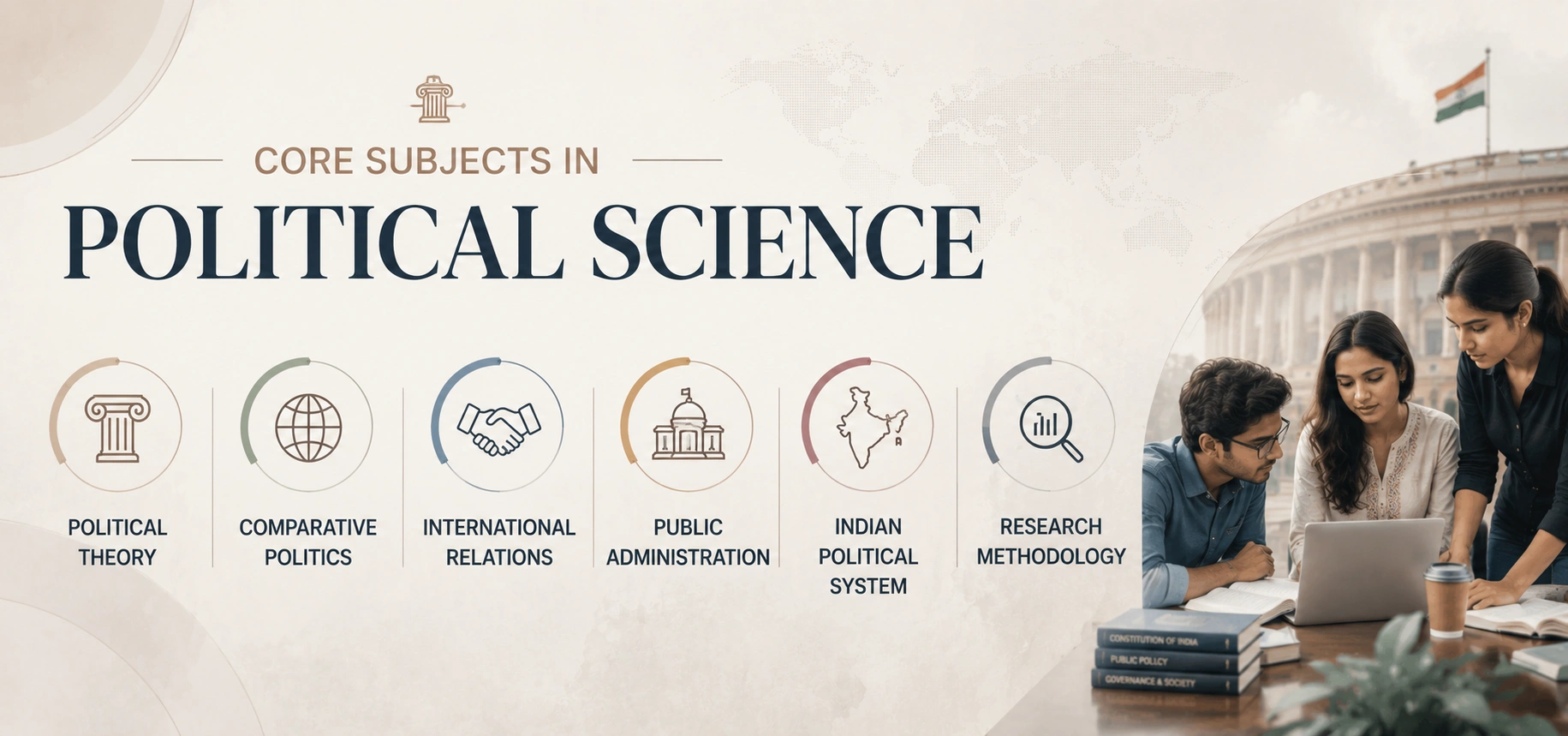
Political Theory
Ideas and philosophies of governance, justice, equality, and rights. From classical thinkers to modern ideologies, this subject builds your analytical lens.
Comparative Politics
Study and compare political systems across nations. Identify patterns, differences, and the factors that make governance effective across different contexts.
International Relations
How countries interact with diplomacy, global conflicts, international organisations, and foreign policy. Essential for anyone eyeing a global career.
Public Administration
Implementation of government policies, bureaucratic systems, and the functioning of public institutions. The bridge between policy and practice.
Indian Political System
Constitution, political institutions, electoral processes, and governance frameworks specific to India are foundational for UPSC and Civil Services aspirants.
Research Methodology
Data analysis, policy evaluation, and structured research skills equip you to contribute meaningfully in academia, think tanks, and public institutions.
Ask Yourself
Which of these subjects sparks the most curiosity in you? Your answer is often the first indicator of the professional direction that will suit you best.
Scope of Political Science

One of the most common concerns students raise is: What is the actual scope of Political Science? The honest answer is far broader than most people assume. The scope of this field has expanded significantly in recent years, driven by growing awareness of governance, policy-making, and global affairs.
Governance and Public Policy
Governments require professionals who can analyse policies, suggest improvements, and ensure effective implementation. Political Science graduates are well-positioned to fill these roles across central and state administrations.
Media and Journalism
Political analysis is a core function of the media. From reporting on elections to examining policy decisions, professionals with a Political Science background bring depth and credibility to news coverage.
Global Career Opportunities
With the rise of globalisation, there is an increasing demand for experts who understand international relations and global governance. Opportunities exist in international organisations, embassies, and multinational institutions.
Research and Think Tanks
Research organisations such as NITI Aayog, Observer Research Foundation, and Centre for Policy Research require individuals who can study political trends, conduct policy analysis, and provide strategic insights.
Career Options After Political Science
A career after Political Science is not limited to politics or government. The degree prepares graduates for a wide spectrum of professional roles across public service, private sector, international organisations, and academia.
|
Career Path |
What you do |
Where You Work |
|
Civil Services (IAS / IPS / IFS) |
Administration, law enforcement, and foreign service roles across India |
UPSC, State PSCs |
|
Public Policy Analyst |
Design and evaluate policies that impact communities and governance systems |
NITI Aayog, NGOs, Think Tanks |
|
Political Journalist |
Report on political events, analyse policy decisions, inform public opinion |
Report on political events, analyse policy decisions, inform public opinion |
|
International Relations Specialist |
Manage international interactions, foreign policy, and diplomatic relations |
Embassies, UN, MEA, MNCs |
|
Law (LLB / Constitutional Law) |
Legal practice with a focus on constitutional, human rights, or international law |
Courts, Law Firms, Judiciary |
|
Academic / Researcher |
Teach, research, and contribute to policy scholarship |
Universities, ICSSR, UGC-NET |
|
NGO / Development Sector |
Lead advocacy and development programmes in education, health, and rights |
Oxfam, CRY, Pratham, UN agencies |
Is Political Science the Right Choice for You?
Choosing the right field of study depends on your interests, strengths, and long-term goals. Political Science is likely a strong fit for you if you identify with the following:
- You follow current affairs closely and enjoy analysing them beyond headlines
- You are curious about how governments, institutions, and legal systems function
- You are preparing for UPSC, State PSC, or other competitive examinations
- You aspire to contribute to governance, law, policy, or social development
- You have strong reading, writing, and analytical abilities
- You are interested in India's political history, Constitution, or global affairs
Reflect on This
If most of the points above resonate with you, Political Science is not just a subject; it may be the academic foundation your career goals require. What kind of impact do you want to have on society? That question is worth sitting with before you decide.
Conclusion
Political Science is more than an academic discipline; it is a structured way to understand the systems that govern our world. From public policy and governance to international relations and law, it offers students the intellectual tools to analyse, engage with, and contribute to societal development.
With a wide political science career scope spanning civil services, diplomacy, journalism, research, legal practice, and the development sector, it continues to be a relevant and rewarding field of study. As the world becomes more complex and interconnected, professionals who can understand and navigate political systems will be increasingly in demand.
Whether your goal is to serve in the Indian Administrative Service, shape public policy, practice constitutional law, or build a career in international affairs, a Political Science degree provides the foundation to pursue those ambitions with confidence.