


“Education is not the learning of facts, but the training of the mind to think.” -Albert Einstein
For decades, education in India was largely measured through degrees. A formal qualification symbolised knowledge, discipline, and readiness for the professional world. But in 2026, employers are beginning to look beyond certificates alone.
Today, hiring decisions are increasingly shaped by how well candidates can apply what they have learned. Organisations are not just asking what you studied; they are evaluating how effectively you use that knowledge to solve real-world problems.
This shift has sparked an important question among students and professionals:
Do degrees still matter as much as before, or have skills become the real deciding factor?
To answer that, it is important to understand how hiring expectations in India have evolved and what employers truly value in today’s competitive job market.
How Hiring Trends in India Are Changing
Over the past decade, the hiring process in India has transformed significantly. Earlier, recruiters relied heavily on academic qualifications to shortlist candidates. A strong degree was often seen as proof of capability.
However, industries today are evolving faster than ever. Technology is advancing rapidly, new job roles are emerging, and traditional roles are being redefined. As a result, employers are facing a new challenge in finding candidates who can adapt quickly and deliver practical results.
Many organisations now include technical assessments, skill-based tests, and project evaluations as part of their hiring process. Instead of relying only on marksheets, recruiters are reviewing portfolios, certifications, and hands-on experience.
This shift reflects a simple reality:
Knowledge alone is valuable, but applied knowledge is what creates real impact.
Why Degrees Still Matter in 2026
Despite the growing focus on skills, degrees continue to play an important role in shaping careers. In fact, many employers still view academic qualifications as the foundation of professional development.
A degree provides structured learning that builds core concepts over time. Subjects are taught in a systematic manner, helping students understand not just how things work but also why they work that way. This depth of understanding becomes essential in complex job roles.
Degrees also demonstrate consistency and discipline. Completing a formal programme requires commitment, time management, and perseverance, qualities that employers value in any professional setting.
In fields such as engineering, finance, healthcare, education, and data science, academic knowledge remains critical. These domains require strong theoretical foundations before practical application becomes possible.
Therefore, while skills are gaining attention, degrees continue to serve as the starting point of professional competence.
Why Skills Are Becoming More Important
While degrees provide the foundation, skills bring knowledge to life. In 2026, employers are increasingly focusing on what candidates can actually do rather than what they have simply studied.
Practical skills allow individuals to solve problems, handle tools, and deliver results. Whether it is coding a software application, analysing data, designing user interfaces, or managing projects, skills demonstrate real capability.
Another reason skills are becoming more important is the rise of digital platforms and online learning. Today, students can access tutorials, certifications, and project-based learning opportunities from anywhere. This has made skill-building more accessible than ever before.
Employers are noticing this shift. Many recruiters now prefer candidates who can showcase:
- Completed projects
- Practical demonstrations
- Internships or freelancing experience
- Certifications in relevant tools
These elements help employers assess readiness for real-world tasks, not just theoretical knowledge.
What Employers Actually Look For Today
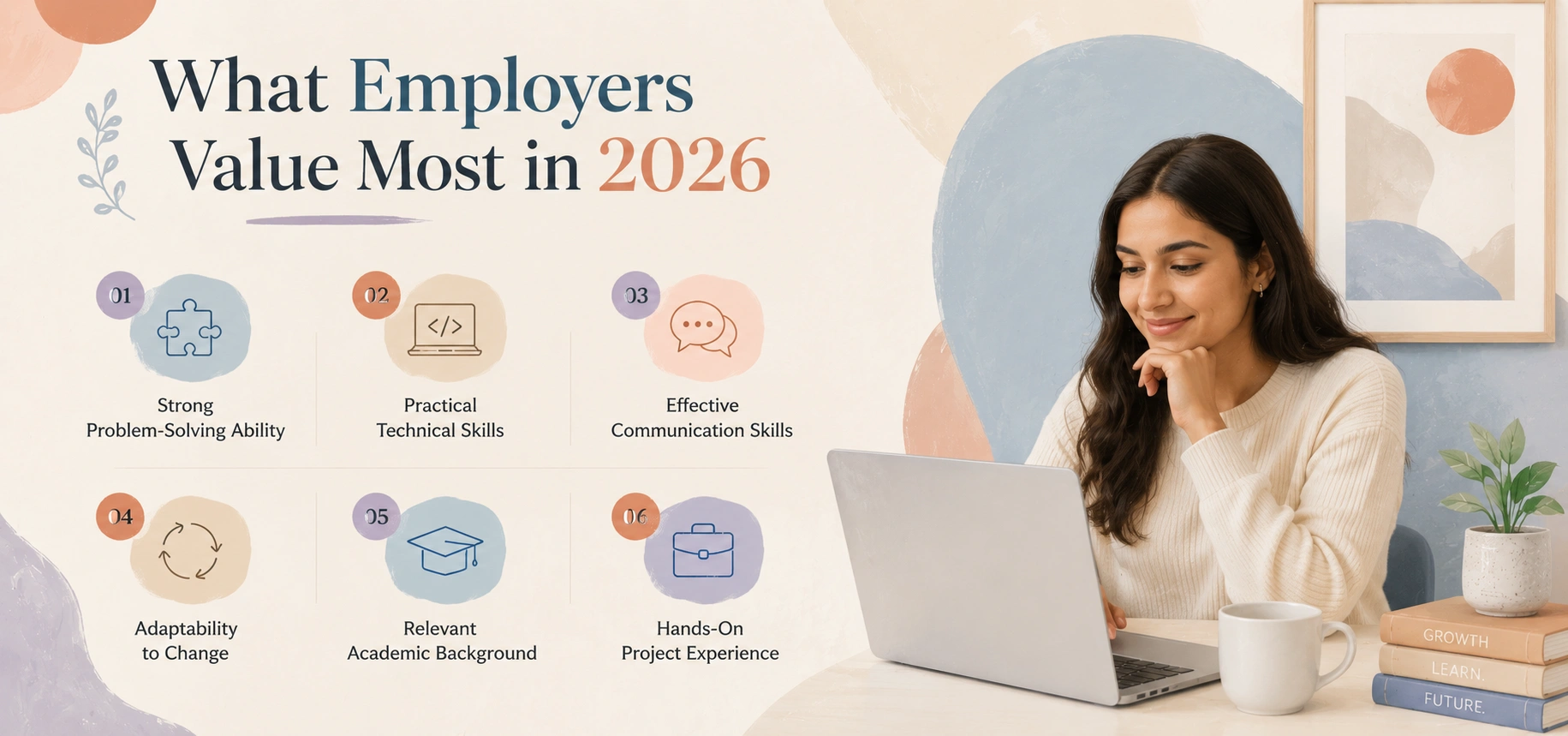
While the debate often focuses on degrees versus skills, employers are actually looking for a combination of qualities that go beyond both.
In 2026, recruiters typically evaluate candidates based on their overall capability, which includes:
Problem-Solving Ability
Modern workplaces require individuals who can identify challenges and find efficient solutions. Employers value candidates who can think critically and approach problems logically.
Communication Skills
Technical knowledge alone is not enough. Professionals must explain ideas clearly, collaborate with teams, and communicate effectively with clients and colleagues.
Adaptability
Industries are constantly evolving, and employees must be willing to learn new tools and technologies. Candidates who demonstrate flexibility and openness to change often stand out.
Practical Understanding
Employers prefer candidates who can apply concepts in realistic scenarios. Even small project experiences can make a significant difference during hiring decisions.
Professional Attitude
Reliability, teamwork, and accountability are qualities that influence long-term career growth. Employers look for individuals who can contribute positively to organisational culture.
These qualities show that modern hiring is not about choosing between degrees and skills; it is about evaluating how well candidates integrate both.
Degrees and Skills: The Real Winning Combination
The most successful professionals today are not those who rely only on degrees or only on skills. Instead, they combine structured learning with hands-on experience.
Degrees build theoretical knowledge and analytical thinking. Skills enable individuals to apply that knowledge in real-world situations. When combined, they create professionals who are both knowledgeable and capable.
For example, a graduate with a computer science degree who also builds personal software projects demonstrates a deeper understanding than someone who only completes coursework. Similarly, a marketing student who experiments with real campaigns gains valuable exposure beyond textbooks.
Employers recognise this balance. Candidates who demonstrate both academic learning and practical ability often receive stronger consideration during recruitment.
This combination not only improves employability but also increases confidence in handling complex tasks.
How Students Can Build Both Degrees and Skills Together
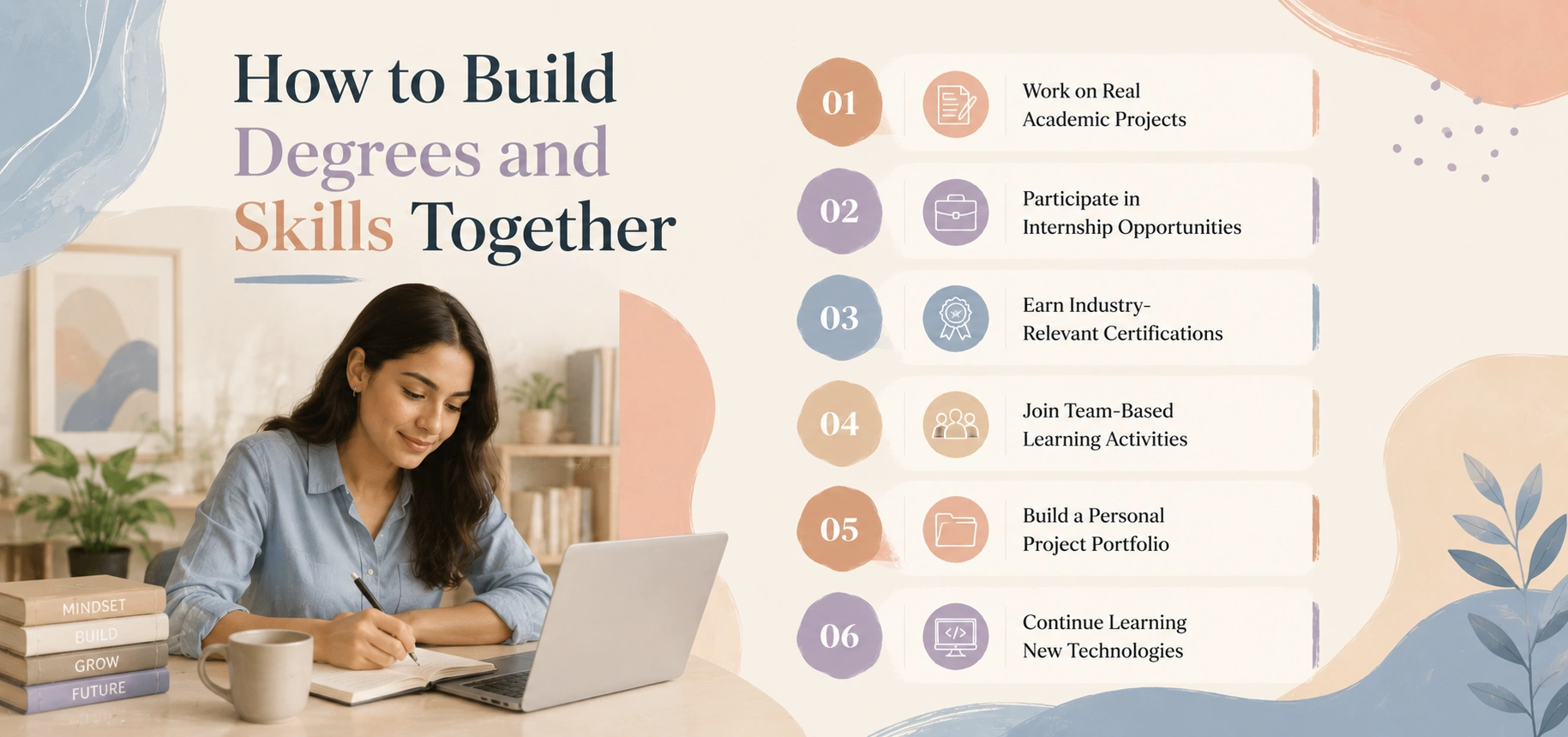
For students and working professionals, the goal should not be to choose between degrees and skills. Instead, the focus should be on developing both simultaneously.
Here are ways to achieve that balance:
Work on Real Projects
Projects help transform principles into practice. Whether academic or personal, projects demonstrate initiative and understanding.
Pursue Internships
Internships provide exposure to workplace environments. They allow students to understand industry expectations and gain hands-on experience.
Earn Relevant Certifications
Short-term certifications can strengthen technical knowledge and showcase specialised skills in areas such as programming, analytics, or digital tools.
Participate in Collaborative Activities
Group assignments, hackathons, and competitions encourage teamwork and problem-solving abilities.
Keep Learning Continuously
Industries evolve rapidly, making continuous learning essential. Staying updated with new trends helps professionals remain competitive.
By combining these efforts with formal education, students can develop a strong professional profile.
The Role of Modern Learning in Bridging the Gap
Modern education systems are increasingly designed to bridge the gap between academic learning and industry requirements. Flexible learning environments, digital tools, and interactive platforms allow students to explore practical knowledge alongside theoretical concepts.
Online learning, in particular, has made it easier for students to access industry-oriented resources, collaborate on projects, and gain exposure to real-world challenges. This flexibility supports continuous skill development without interrupting academic progress.
As the demand for adaptable professionals continues to rise, education models that integrate academic structure with practical learning are becoming more valuable.
Conclusion
In 2026, the debate between degrees and skills is no longer about choosing between them. India's employers are looking for individuals who combine strong academic foundations with the ability to apply knowledge effectively in real-world situations.
Degrees continue to provide structure, discipline, and theoretical depth. Skills, on the other hand, demonstrate readiness, creativity, and adaptability. Together, they form the foundation of long-term career success.
For students planning their future, the focus should not be on replacing degrees with skills, but on strengthening degrees with meaningful practical exposure. Choosing programmes that encourage project-based learning, industry interaction, and continuous development can significantly improve employability.
Institutions that offer structured learning along with opportunities to build practical skills, such as LPU Online, help students prepare for modern workplace expectations where both knowledge and capability matter equally.
Ultimately, the real advantage in 2026 belongs to those who learn continuously, adapt confidently, and combine education with action.