

Every organisation is built on processes, products — and most importantly, people.
Behind successful teams and sustainable cultures are HR professionals who recruit, nurture, and empower the workforce.
But in a world driven by AI, automation, and hybrid work models, is Human Resource Management (HRM) still a relevant and rewarding career path?
Let’s explore what makes HR not only a good career choice — but a strategic and future-ready one.
What Is Human Resource Management, Really?
At its core, HR is about managing people and aligning their growth with organisational goals. It includes:
- Talent acquisition and workforce planning
- Performance and compensation management
- Training and development
- Employee engagement and well-being
- Organisational behaviour and change management
- Labour law compliance and conflict resolution
But today, HRM goes beyond operations. It plays a strategic role in shaping business outcomes — especially in talent-driven economies.
Why HR Is a Career That Matters More Than Ever
People Are a Company’s Biggest Asset
Modern companies understand that growth doesn’t come from machines — it comes from engaged, high-performing teams. HR plays a key role in building those.
Leadership Needs Strong Culture
Whether it’s startups or global giants, organisations with strong HR practices retain better talent and outperform their peers. HR helps design and protect this culture.
Work Is Evolving
With hybrid workplaces, diversity mandates, mental health awareness, and skill-based hiring — HR professionals are now culture architects and change enablers.
Who Should Consider a Career in HR?
Ask yourself:
- Do you enjoy working with people?
- Are you good at communication and conflict resolution?
- Do you value fairness, empathy, and structure?
- Are you interested in psychology, business, or workplace behaviour?
- Do you want to grow into leadership roles that impact people’s lives?
If you said yes to most — HRM could be the ideal blend of purpose and profession for you.
What Skills Will You Need in HR?
- Strong communication and emotional intelligence
- Problem-solving and decision-making skills
- Organisational planning and analytical thinking
- Understanding of labour laws and HR tech tools
- Strategic mindset to connect people policies with business goals
An MBA in Human Resource Management helps you build these skills and prepares you for leadership.
Career Opportunities After HR Specialisation
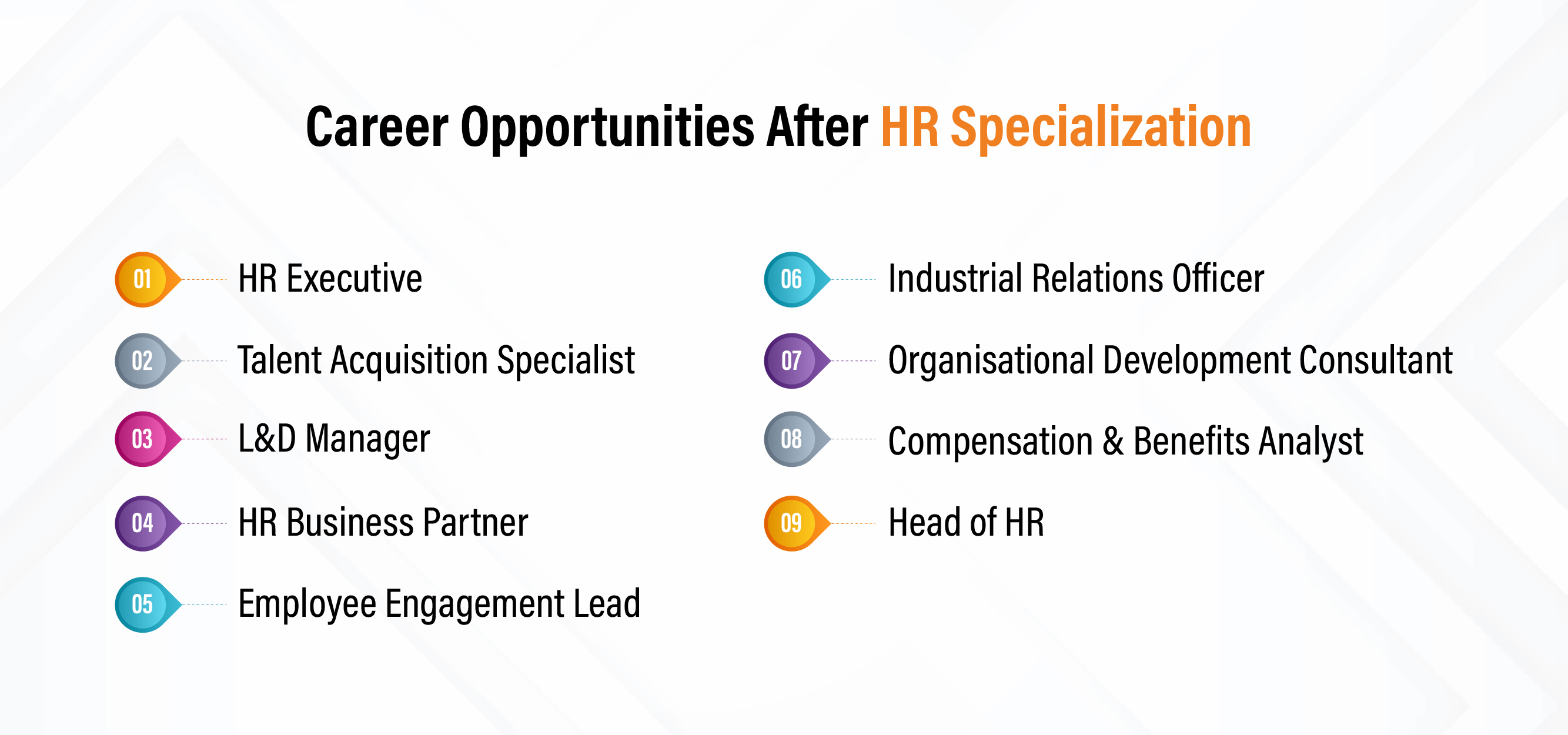
HR roles exist in every industry — from IT and healthcare to education, finance, FMCG, and more.
You could work as:
- HR Generalist / HR Executive
- Talent Acquisition Specialist
- L&D (Learning & Development) Manager
- HR Business Partner
- Employee Engagement Lead
- Industrial Relations Officer
- Organisational Development Consultant
- Compensation & Benefits Analyst
- CHRO (Chief Human Resources Officer) — with experience
And yes — HR professionals are increasingly sitting at the leadership table.
Benefits of a Career in HR
- Versatile and cross-industry roles
- High demand for skilled HR professionals
- Fulfilling work that impacts people directly
- Opportunities to grow into strategic leadership
- Continuous learning — about people, systems, and culture
Final Thought: Is HR Right for You?
If you're someone who:
- Enjoys people-driven roles
- Wants to build strong, sustainable teams
- Believes in fairness, growth, and culture
- Aspires to lead with empathy and clarity
Then Human Resource Management isn’t just a good career — it’s a high-impact, future-proof profession where your decisions shape lives and businesses alike.
Build Your HR Career with LPU Online
At LPU Online, our MBA in Human Resource Management combines academic depth, practical insights, and career-focused learning. With expert faculty, case-based curriculum, and placement support — we help you grow into the HR leader organisations need today.