

The headlines are everywhere, fueling a persistent anxiety about artificial intelligence and the future of work. It’s a real concern, with AI “reshaping industries at a pace faster than most professionals anticipated.” The fear that automation will make human jobs obsolete is understandable, but the reality of AI’s impact is far more nuanced and surprising than the common narrative suggests.
The conversation is shifting from a simpler fear of job replacement to a more complex understanding of job transformation. While some roles will be displaced, many more will be redefined, augmented, and created. The professionals who thrive in this new landscape will be the ones who look beyond the alarmist headlines and grasp the underlying truths of this technological revolution.
This blog cuts through the noise to reveal some of the most impactful, research-backed truths about the evolving world of work. More importantly, it provides actionable strategies based on these truths, designed to help you not just survive, but build a resilient and relevant career in the age of AI.
It’s Not About Job Loss: It’s About Job Quality
While the public debate centers on whether AI will eliminate jobs, the most immediate and widespread impact is on the nature and quality of the jobs that already exist. The Organisation for Economic Co-operation and Development (OECD) reports that “so far, the greatest impact of AI has been felt mostly through changes in the tasks they perform in their current roles as well as a change in the working environment.”
This transformation is a double-edged sword, creating both positive and negative effects on daily work life.
The Good and The Bad
|
The Good |
The Bad |
|
AI automates tedious and repetitive tasks, improving job enjoyment for a majority of workers (63% in finance and manufacturing). |
AI can significantly increase work intensity and pace, with over 75% of workers reporting an increased pace. |
|
This shift allows employees to focus on more engaging work, which enhances their mental and physical health. |
For some, this comes at the cost of decreased autonomy as algorithms dictate workflows more rigidly. |
This dual impact forces a necessary shift in focus from job quantity to job quality. The real question is not just whether you’ll have a job, but what that job will look and feel like. This fundamental shift in what a ‘job’ is and how it’s valued doesn’t just affect our daily work; it’s creating a new economic reality with clear winners and losers.
AI Is Creating a New Wage Divide: The Augmentation VS Automation Effect
AI’s influence on income is not uniform; it is actively polarizing the labor market, creating a new divide between those who work with AI and those whose work is replaced by it.
The AI Skill Premium
A distinct advantage is emerging for those who can develop, train, or maintain AI systems. The OECD found that job postings requiring AI skills offer a wage premium of up to 11% within the same firm compared to similar roles without that requirement. This “AI skill premium” rewards a small but growing segment of the workforce with significantly higher earnings.
Augmentation VS Automation
A recent study on the labor market effects of AI distinguishes between two types of AI with very different economic consequences:
- Augmentation AI: This technology enhances the output and productivity of high-skilled workers, complementing their expertise.
- Automation AI: This technology substitutes for low-skilled labor by taking over routine, predictable tasks.
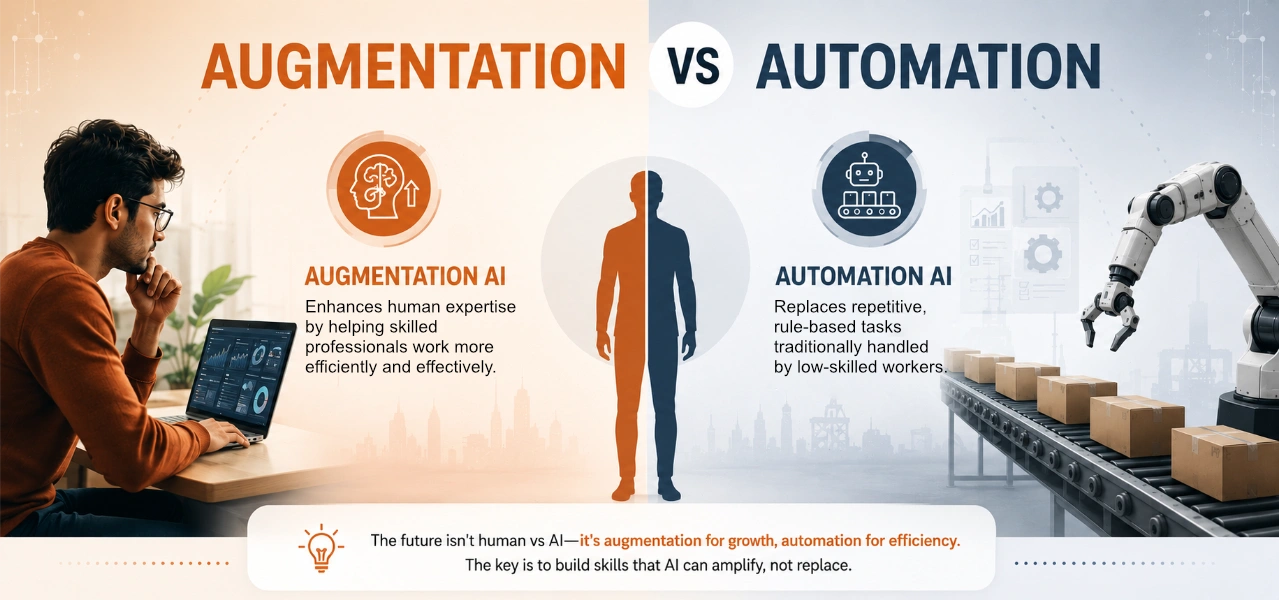
The outcome of this divergence is clear: augmentation AI raises wages for high-skilled occupations, while automation AI negatively impacts wages and employment for low-skilled roles, directly contributing to rising wage inequality.
The Sobering Reality for Most
For the majority of professionals who are simply exposed to AI tools in their daily work but are not AI specialists, the technology has had “only a minimal impact on wages so far,” according to the OECD. This indicates that unless you are directly involved in building or managing AI, the immediate financial benefits are not yet trickling down. This growing wage gap underscores a critical new reality: as AI handles routine cognitive tasks, the economic premium is shifting decisively toward skills that machines cannot replicate.
Human-Centric Skills Are Your New Job Security
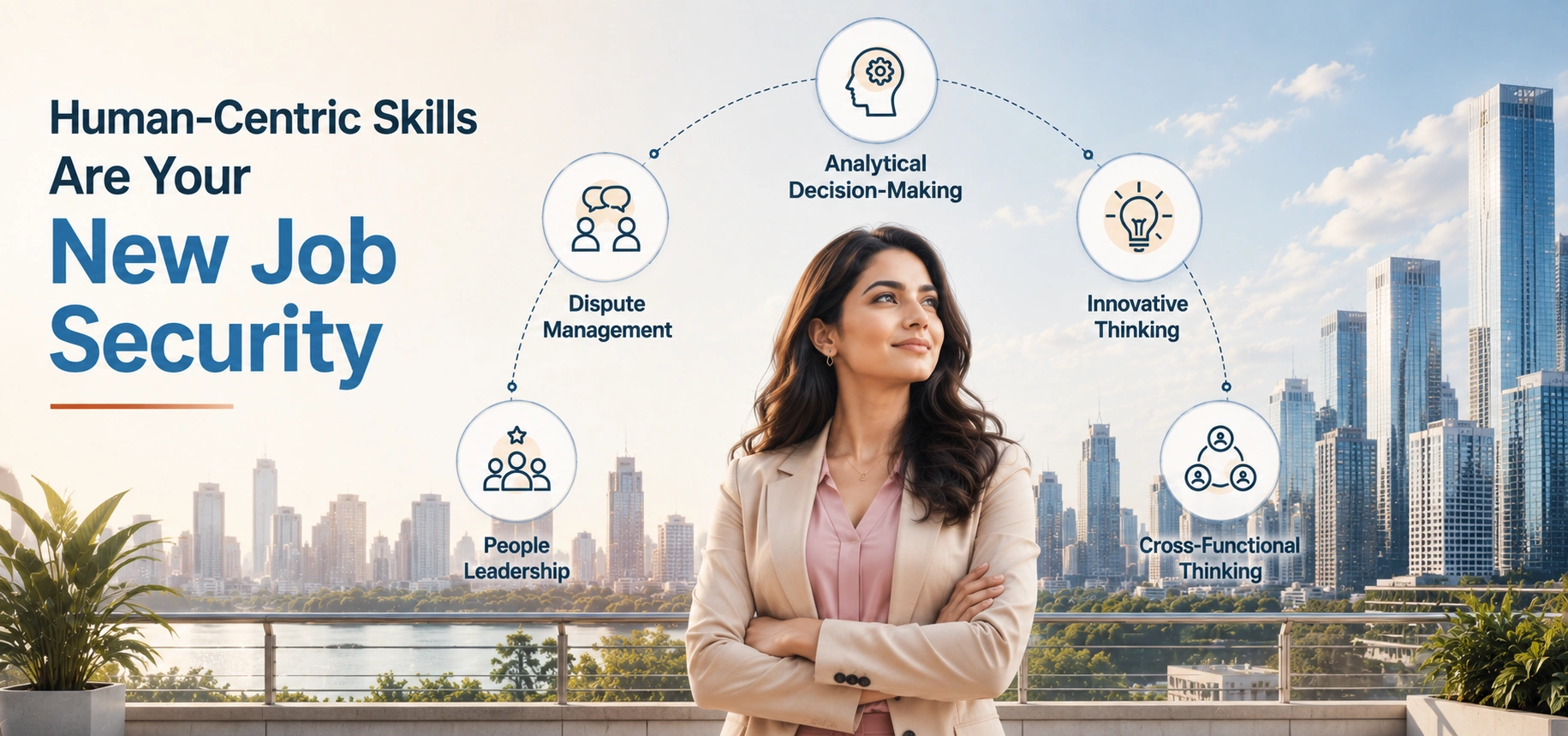
As AI masters analytical and repetitive tasks, the most durable and valuable skills are those that are uniquely human. These are the abilities that AI cannot easily replicate, requiring nuance, empathy, and contextual understanding.
Your most future-proof skills include:
- Structured Problem-Solving: Navigating a complex, ambiguous challenge where the rules are not clearly defined.
- Conflict Resolution & Negotiation: Understanding and managing human emotions and motivations to reach a consensus.
- Creativity & Conceptual Thinking: Generating novel ideas and making connections that are not based on existing data patterns.
- Leadership & Emotional Intelligence: Inspiring, motivating, and coordinating teams of people.
- Interdisciplinary Judgment: Combining insights from different fields to make holistic decisions.
This is not just a theoretical advantage. AI has the potential to enhance productivity and efficiency across industries, leading to the creation of new roles that require human intelligence, creativity, and emotional intelligence – areas where machines currently fall short.
Bust possessing these skills isn’t a one-time achievement. The very nature of career security has shifted from what you know to how fast you can learn.
Adaptability Has Replaced Mastery
The “shelf life of skills is shrinking,” which means that the ability to learn and adapt is now far more valuable than deep expertise in a single, static domain. Professionals must adopt a mindset of continuous evolution to stay relevant.
In a world where industries are being disrupted faster than ever, your ability to learn, unlearn, and relearn is your true job security.
Practical strategies for building this adaptability include seeking out “micro-credentials and certifications” to stay current and engaging in “role experimentation” by taking on new tasks or lateral roles to build a more resilient and diverse skill portfolio. This need for constant adaptation isn’t just an individual responsibility; it’s also reshaping how performance is measured and managed, sometimes by non-human bosses.
Your Next Manager Might Be an Algorithm
The concept of “algorithmic management” using AI to support or automate management decisions is moving from theory to reality. This includes using algorithms to monitor worker performance, allocate tasks, decide on promotions, or determine who receives training.
While this can lead to more data-driven and consistent decisions, it also comes with significant risks:
- Workers subject to algorithmic management are less positive about AI’s impact on their performance and job enjoyment.
- It is often associated with a higher pace of work and increased work intensity.
- It raises major privacy concerns, with a majority of affected workers worried about how their data is being collected and used.
Beyond issues of privacy and work intensity, one of the most significant risks of algorithmic management is its potential to encode and scale unfairness yet it also holds the surprising potential to be a cure.
AI Is Both a Cause of Bias and a Potential Cure
Artificial intelligence holds a paradoxical role in workplace fairness. It has the potential to either amplify systemic biases or become a powerful tool for promoting objectivity and inclusion.
AI models learn from historical data. If that data contains past biases related to gender, race, or age, the AI can absorb and even amplify those biases in its decisions. This can lead to discrimination in hiring, performance reviews, and promotion opportunities, systematizing unfairness at an unprecedented scale.
Productivity Gains Will Come from Redesigning Jobs, Not Just Eliminating Them
The most forward-thinking organizations understand that the true economic value of AI will not come from simply cutting headcount. Instead, it will arise from fundamentally redesigning jobs to augment human capabilities. Research suggests the “most economic value of AI is expected to arise from productivity gains rather than role displacement.”
This involves a strategic process of job redesign, where AI is used to automate, optimize, and reallocate tasks. This frees up human workers to focus on areas where they hold a clear “comparative advantage” over machines. These high-value human tasks include:
- Strategic leadership
- Complex problem resolution
- Stakeholder management
The goal is not replacement, but a powerful human-AI collaboration where each plays to its strengths. As roles are redesigned around these high-value human tasks, simply performing them isn’t enough. In a competitive landscape, ensuring your unique contributions are visible becomes a critical defensive strategy.
Conclusion
AI is undeniably a disruptive force, but history has shown that every wave of technological change creates immense opportunities for those prepared to adapt. The path to a secure and fulfilling career is not found in fighting automation but in strategically blending digital fluency with our most uniquely human skills.
By investing in continuous learning, cultivating emotional intelligence, and building a resilient professional brand, we can not only safeguard our careers but also take an active role in shaping the industries of the future. The rules have changed, and a new imperative has emerged.
In the age of disruption, your greatest asset is not a static skill but the ability to evolve.