

The Strategic Shift in Content
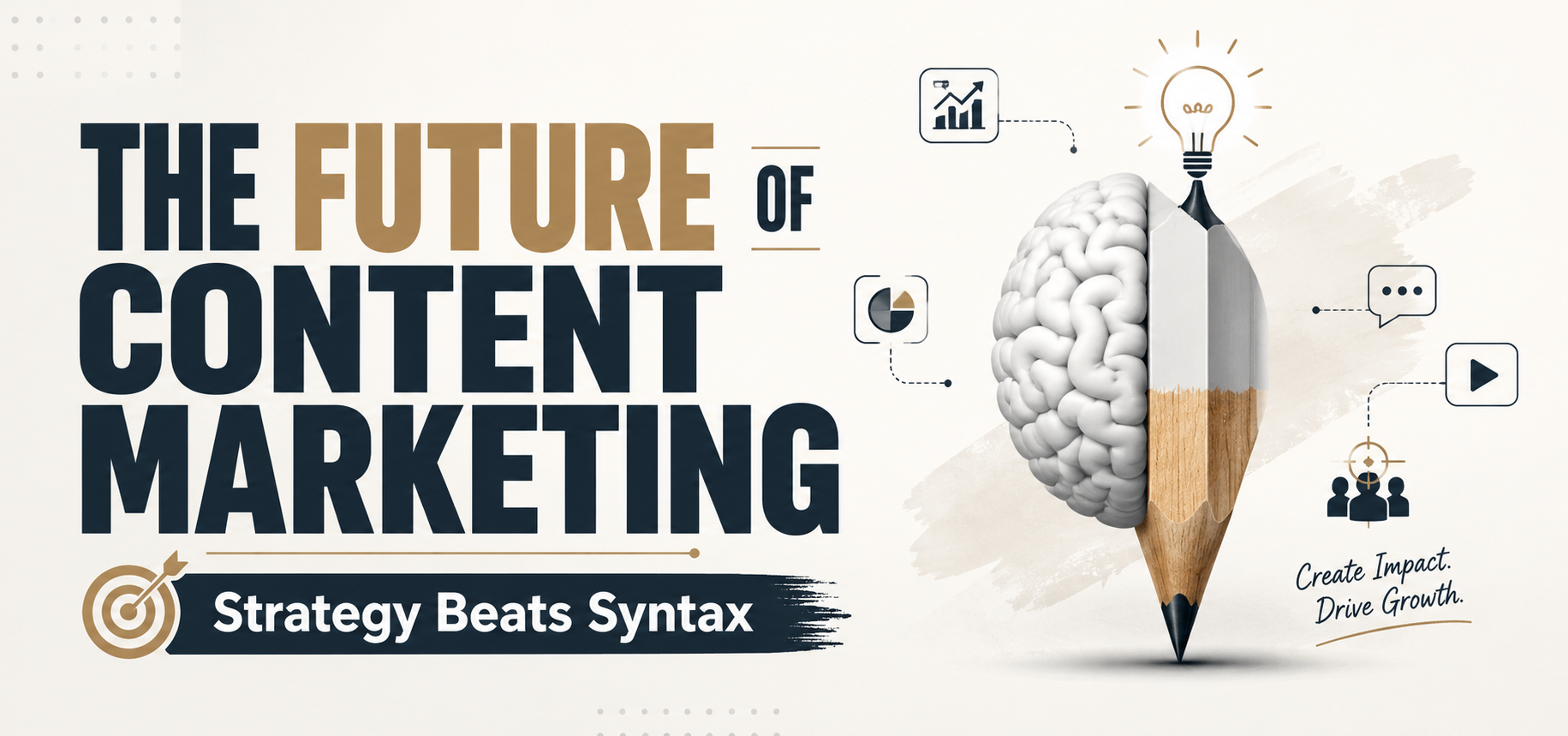
An important turning point has been achieved in the digital economy. The idea that a content producer is someone who is only interested in the "craft" of writing is becoming outdated. The "Strategist" has replaced it as the new benchmark for longevity in the workplace. Content is no longer a creative extra in this high-stakes environment; rather, it is a fundamental business strategy and the main source of income attribution.
To navigate this transformation, senior leaders now evaluate success through the "3V's of Content":
- Value: Value ensures that every asset serves a specific stage of the customer journey.
- Variety: Variety addresses the fragmented nature of modern consumption across AI-search and social platforms.
- Velocity: Velocity maintains the brand’s competitive heartbeat in an automated market.
The difference between companies that are doing well and those that are having trouble gaining attention is widening as the global market expands more quickly than ever before. The 2026 victors are changing their perspective. Instead of treating content as a line item to be trimmed, they treat it as an investment with a high return.
The "Guessing" Gap: Why Most Content Marketers are Struggling
Data is the difference between professionals who succeed and those who fail in the very competitive 2026 market. Yet, the industry is dealing with a serious strategy shortfall. While 97% of marketers say they use content, Research Dive and HubSpot data indicate that only 37-40% work with a documented plan. The outcome is scattered execution, where effort is high but impact remains low.
Research from Siege Media and the Content Marketing Institute suggests that about 66.5% of marketers lack clarity on where to allocate resources for measurable returns. This lack of focus feeds into a measurement gap, with 33 to 50% of teams unable to demonstrate the financial value of their work. The business implication is blunt. Leaders who are unable to demonstrate return on investment are viewed as disposable in a tight economy. Functions that are unable to provide statistics to support their impact are frequently the first to be eliminated when resources become tight.
This is where the "Web & Social Media Analytics" module of an MBA in Digital Marketing becomes a career-saving asset. It moves a professional beyond vanity metrics like "likes" or "shares" and into the realm of financial accountability, teaching them how to use data to justify every rupee spent and protect their seat at the leadership table. The 95% failure rate of AI pilots, caused primarily by a lack of strategic alignment, further underscores that tools without frameworks are merely expensive distractions.
The $107.5 Billion Opportunity: From Creator to Strategist
Bridging this strategy gap unlocks a massive global windfall. It is projected that the content marketing industry may reach a valuation of $107.5 billions by the end of 2026, driven by a surge in personalised AI content and high-intent asset creation. For Indian professionals, this is not just a growth statistic; it is a career gold mine. However, capturing a share of this $100B+ pie requires a fundamental transition from "Content Writer" to "Content Strategist."
A writer focuses on the output; a strategist focuses on the outcome. They understand the complex psychology of the funnel, the invisible path that moves a user from the initial "Who are you?" curiosity to the "Take my money" conversion. Companies are no longer trusting self-taught creators with multi-million dollar budgets. At a $100 billion scale, the prerequisite for leadership is the financial and organisational rigour that only an MBA provides.
The financial reasoning is indisputable. Compared to typical outbound tactics, strategic content marketing costs 62% less and produces three times as many leads. Additionally, according to HubSpot, businesses that use long-form, strategic assets witness a 434% increase in indexed pages on search engines, which considerably reduces the cost of customer acquisition (CAC). Leaders who are capable of overseeing these crucial P&L processes are attracting capital.
The MBA Edge: Bridging the Skill Gap with LPU Online
"On-the-job" experience is not enough for high-level supervision in 2026. True leadership requires a formal academic framework to manage complexity and scale. The LPU Online MBA program directly addresses the "Content Marketing Manager Skills" required to thrive in this environment.
Marketing Management: Precision and Positioning
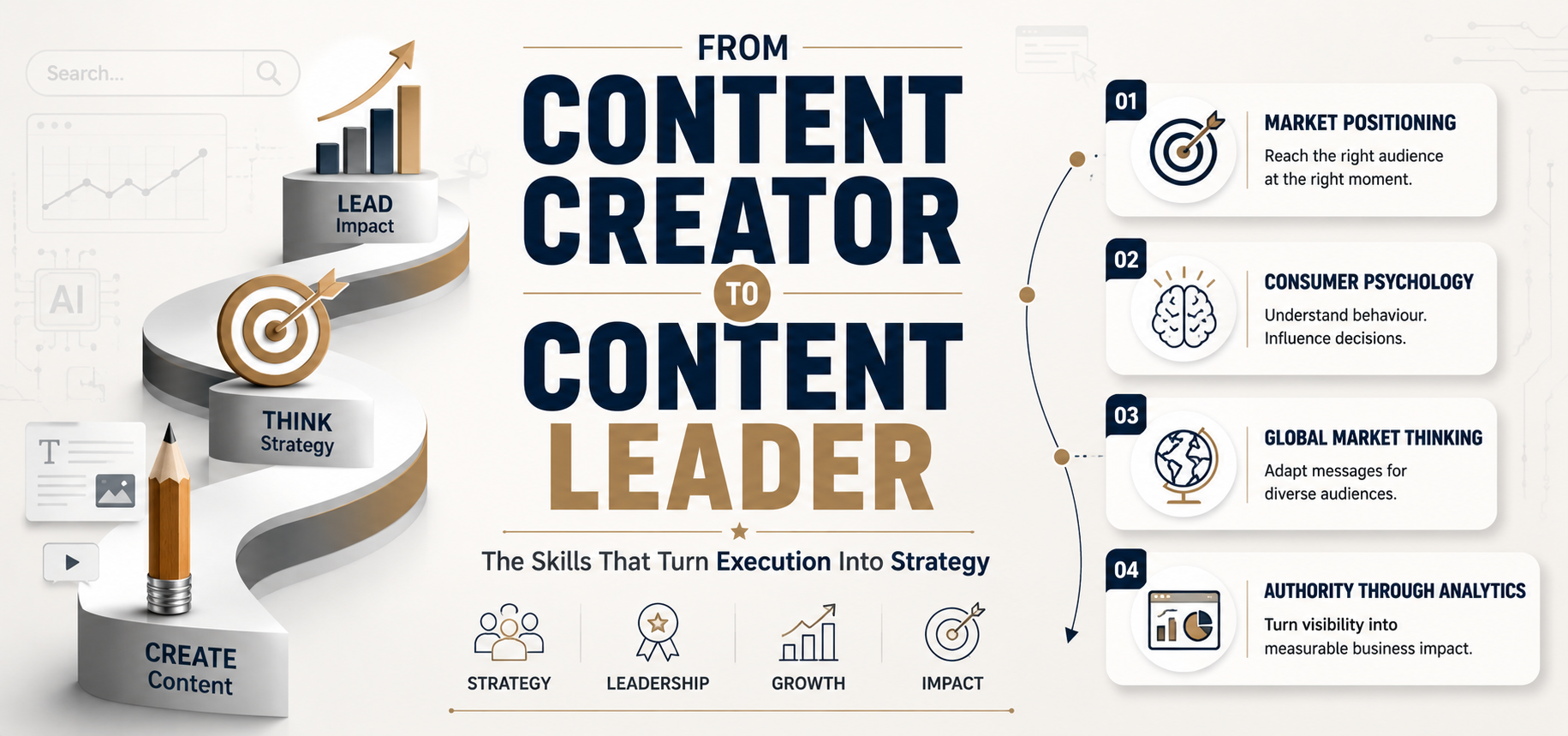
The art of Segmentation and Positioning is the difference between a viral fluke and a sustainable campaign. By mastering these frameworks, strategists ensure that high-intent content reaches the right audience at the exact moment of need, maximising the efficiency of the marketing spend.
Organisational Behaviour: The Psychology of the Click
Success in content requires leading diverse creative teams and understanding the behavioural triggers of the modern consumer. This subject provides the psychological depth needed to predict consumer reactions and the leadership skills to manage writers, designers, and AI prompt engineers toward a unified vision.
International Business: Glocalisation in Action
As brands in EdTech and FinTech scale globally, "Glocalisation" becomes a critical skill. An MBA teaches you how to adapt global brand "trust signals" for different markets. For example, a strategist might pivot a FinTech product’s messaging from "technological transparency" in the Middle Eastern market to "community social proof" in the Indian market, ensuring cultural relevance while maintaining brand integrity.
SEO & Analytics: From Visibility to Authority
In the age of Generative AI search, simple visibility is no longer enough. The LPU curriculum emphasises "Brand Authority" as the primary ranking factor. By utilising Social Media Marketing & Analytics, professionals learn to use data to prove that a specific asset didn't just get views, it moved the needle on revenue attribution.
Career Scope and Industry Demand in 2026
The hiring landscape in India has reached a tipping point, particularly in the EdTech, FinTech, and E-commerce sectors. These industries are desperate for MBA-led teams that can navigate regulated markets and high-pressure growth targets. The demand for roles such as Content Strategist, Brand Manager, and Performance Content Lead has never been higher.
In 2026, an MBA graduate commands a significant salary premium over a certificate holder. This premium is not paid for the ability to write; it is paid for risk mitigation and strategic oversight. Companies are willing to pay more for a leader who can ensure a $1 million campaign doesn't fail due to poor alignment. This shift is validated by DemandSage data, which indicates that 42% of top-tier marketers are now prioritising leadership and data analytics over creative writing skills. They are looking for architects, not just builders.
Future-Proofing: Content Marketing in the Age of AI
"AI anxiety" is prevalent, but for the strategic manager, AI is a force multiplier, not a replacement. An MBA prepares you to manage AI tools as part of a broader business goal, ensuring they serve the brand rather than diluting its voice.
The 95% failure rate of AI pilots mentioned by MIT Sloan is a direct result of "leadership without strategy." Strategic management acts as the ultimate insurance policy against automation. As search engines prioritise "Brand Authority" and human-led credibility, the strategist’s role in maintaining a brand’s unique perspective and Customer Lifetime Value (CLV) becomes the most critical asset in the organisation.
Conclusion: Your Roadmap to Leadership
The content marketing careers of 2026 belong to the professionals who treat their department as a revenue-generating engine rather than a cost centre. The industry has matured, and the rewards for those who can provide high-level strategic direction are at an all-time high.
If you are ready to transition from execution to high-stakes leadership, the LPU Online MBA in Marketing or Digital Marketing is your ideal launchpad. It provides the business acumen, data literacy, and institutional credibility required to command the $107.5 billion economy of the future. Investing in strategic education is no longer an option; it is the most effective way to lead the 2026 digital landscape.
FAQs
- What is the average salary jump after an MBA in Digital Marketing?
The salary "jump" typically represents the move from a "Specialist" ceiling to a "Director" floor. While figures vary by sector, MBA graduates command a premium because they are paid for risk mitigation and their ability to oversee large-scale resource allocation, rather than just creative output. - How does an MBA help me handle AI in content creation?
With 95% of AI pilots currently failing due to strategic misalignment, an MBA provides the framework to integrate these tools into business goals. It teaches you to manage AI as a productivity tool that serves the bottom line, ensuring technology drives ROI instead of creating noise. - Why is "Strategy" more important than "Writing" in 2026?
The market is saturated with content, but only 40% of brands have a documented plan. This "strategy deficit" means that the ability to align high-intent assets with the sales funnel and prove revenue attribution is far more valuable to a company than the act of production itself. - Can I transition from a non-marketing background into a Content Strategist role via an LPU Online MBA?
Absolutely. The program focuses on transferable leadership skills and foundational pillars like Marketing Management and Organisational Behaviour. These provide the universal business frameworks and psychological insights necessary to lead any creative or strategic department, regardless of your previous career path.
The statistics, market projections, and industry benchmarks cited in this article have been compiled from research and insights published by leading industry sources, including Research Dive, HubSpot, the Content Marketing Institute (CMI), Siege Media, Demand Metric, and MIT-affiliated research studies on AI adoption and business performance. All figures referenced were current and publicly available at the time of writing.