


Introduction
From buying a morning latte to setting aside money in a monthly SIP, finance quietly shapes many of the choices we make every day. We may not always notice it, but it's there in the background - whether we're scanning a QR code to pay for a meal, checking how our investments are performing, or deciding how to spend and save our money.
Beyond our personal lives, finance plays an equally important role in the world around us. It powers startups as they raise funds to grow, influences the interest rates set by banks, and drives the rise of new apps that make borrowing, saving, and investing easier than ever. In many ways, finance is woven into the fabric of modern life, influencing not just individual decisions but also the businesses, technologies, and economies that shape our future.
For many students, however, finance can feel like an unfamiliar world. Concepts such as investing, budgeting, interest rates, and financial markets often seem abstract and disconnected from their everyday lives. As a result, their first encounter with finance is often accompanied by confusion and uncertainty. Surrounded by unfamiliar terminology, charts, and calculations, many students struggle to see how these concepts relate to them personally, making the subject appear far more intimidating than it actually is.
But the simple truth is that finance today is not just about numbers. It is about decision-making, problem-solving, and understanding how money keeps the real world afloat. This is why more students and working professionals are now exploring an Online Master’s in Financial Services and, not as a backup option but as a practical way to build a stable, future-ready career in a world where money systems are becoming more digital, more connected and more important than ever.
Why have financial services become a high-growth career?
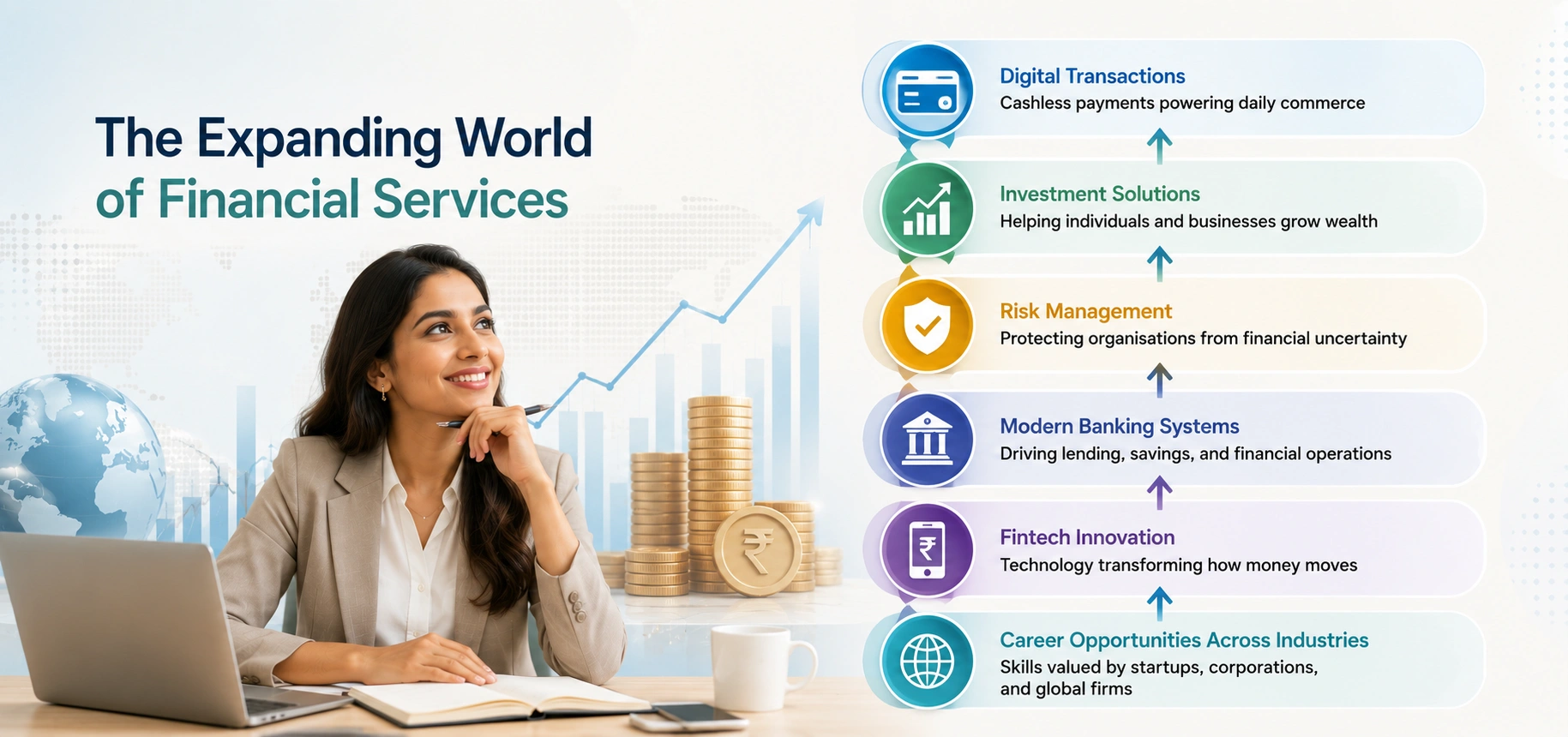
Financial services are no longer limited to banks and traditional offices. It now includes:
- Digital payments and UPI platforms
- Online investment apps
- Insurance technology
- Fintech startups
- Digital lending platforms
- Wealth management services
- Risk and compliance systems
In simpler terms, money has gone digital, and careers have followed.
Every business needs humans who understand:
- How is money managed?
- How can financial risks be controlled?
- How are investments planned?
- How do systems stay legally and financially safe?
This is why service roles continue to grow even when other sectors slow down. The demand is not limited to one industry; it exists across startups, corporations, banks, fintech firms, and global companies.
For students, this means one important thing:
Finance is no longer a narrow career path; it is a broader, more diverse career ecosystem.
Why are students choosing online master’s programmes?
There’s no denying that traditional education still matters, but career journeys today are no longer straight pathways.
Some students work while studying. Some change careers. Some want to upgrade skills without leaving their jobs. Some want flexibility without losing quality.
This is where online learning fits naturally.
An Online Master’s in Financial Services allows learners to:
- Study without relocating.
- Learn while working.
- Better time management.
- Apply learning directly in real life.
- Build skills gradually.
Instead of putting life on hold for education, students now build education into life.
This shift is not about inconvenience; it is about relevance.
What you actually learn in a master’s in Financial Services
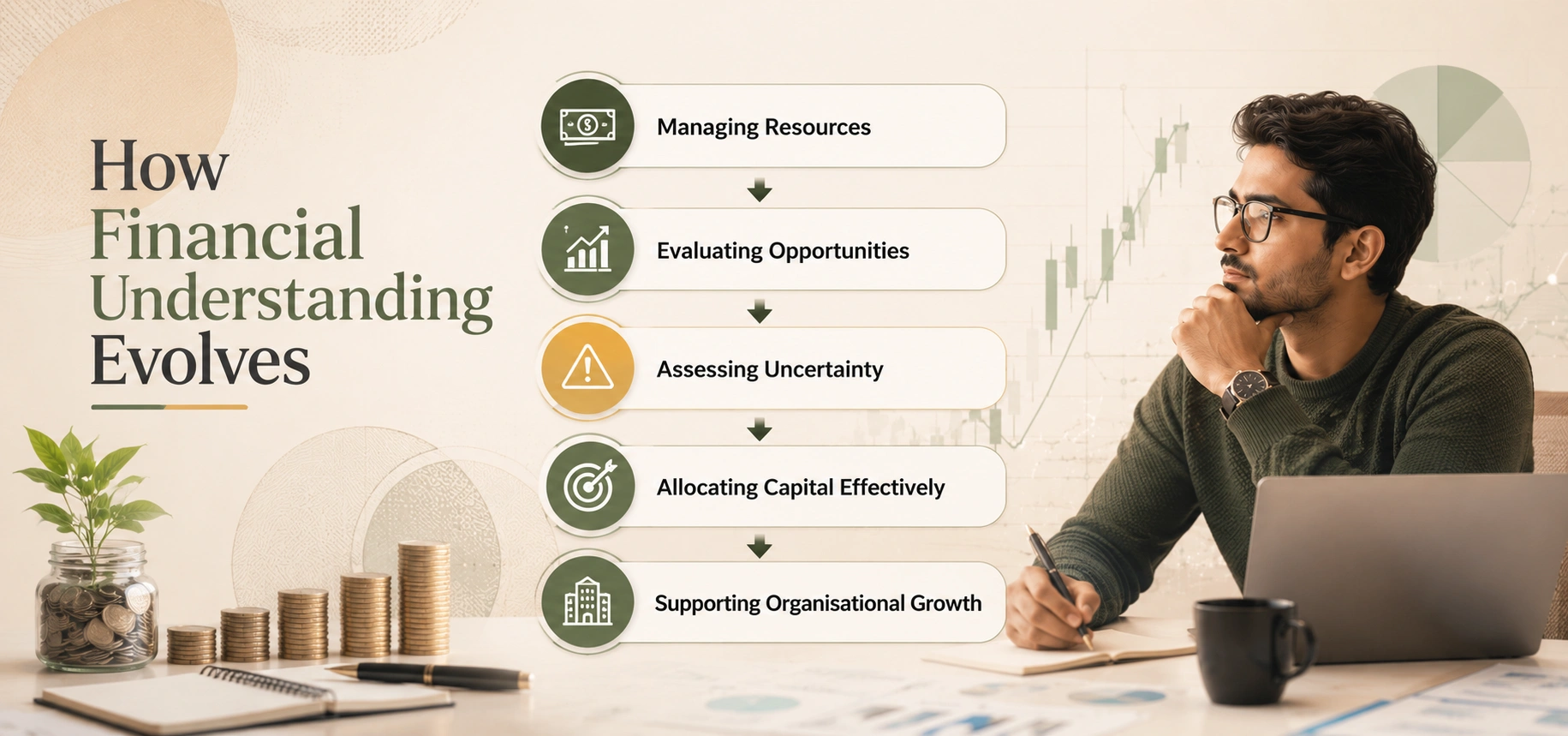
This programme is not about memorising theory. It is about understanding how financial systems work in practice.
Students gradually learn:
- How businesses manage money
- How financial decisions affect growth
- How risks are identified and handled
- How investments are evaluated
- How financial planning works for individuals and organisations
The learning journey usually moves from UNDERSTANDING to APPLICATION to DECISION MAKING to STRATEGY.
- This builds confidence, not unjust knowledge.
- Instead of asking “What is finance?” students begin to ask
- Why did this company invest here?
- How can this risk be reduced?
- What is the smarter financial choice?
That mindset shift is what creates professionals
Practical Example: How Finance Skills Translate into Real Careers
For a student with no background in finance, the journey usually begins with the basics - understanding how money is managed, how budgets work, and how financial systems function. As they progress, they start learning how businesses make investment decisions, allocate resources, and assess risks. Eventually, they develop a deeper understanding of how markets operate and how financial decisions shape the world around them.
Along the way, something important changes.
They stop looking at money as simply income and expenses. Instead, they begin to see it as:
- Planning
- Strategy
- Structure
- Systems
This shift in perspective is what makes finance education so valuable. It doesn't just teach students how money works - it helps them think more critically, make informed decisions, and approach their careers with greater confidence.
Career Opportunities After a Master’s in Financial Services
A postgraduate degree in financial services opens doors across multiple sectors. Some common career paths include:
- Financial Analyst: Professionals who study data, trends and reports to support business decisions.
- Banking & Financial Operations: Roles that manage lending, transactions, customer services and internal systems.
- Risk and Compliance Roles: Ensuring businesses follow financial rules and manage financial risks responsibly.
- Investment & Wealth Management: Helping individuals and organisations grow their money safely and smartly.
- Fintech & Digital Finance Roles: Working in digital payment systems, financial apps and online finance platforms.
The key ADVANTAGE? These roles exist across industries and not just in banks.
Why this career path feels secure
Some careers depend on trends. Finance depends on systems.
As long as businesses exist, money management will exist. As long as people save, invest, borrow and spend, financial services will grow.
This makes finance one of the few fields that offers:
- Long-term stability
- Structured growth
- Professional credibility
- Cross-industry demand
It is not a shortcut career. It is a build-and-grow career.
How Online Learning Supports Career Growth
Online programmes support learning realistically:
- Students learn step by step
- Concepts are connected to real life
- Learning continues alongside work
- Skills grow with experience
Instead of learning first and working later, students learn while working. This creates stringer professional.
Choosing the Right Programme: What Really Matters
When selecting and Online Master’s in Financial Services, students should focus on:
- Curriculum relevance
- Practical learning approach Career orient structured
- Skill development focus
- Learning flexibility
Not just the degree name.
A good programme should make students feel:
- Clear about their path
- Confident in their learning
- Prepared for real work
Conclusion
Finance is not just a subject; it is a life skill that helps individuals understand how systems function, how decisions are made and how money shapes opportunities. An Online MAster’s in Financial Services is not about becoming an expert overnight but about building understanding, confidence and a strong career foundation that grows with time. For studentsseeking a career that is stable, respected, flexible and future ready, financial services remains one of the most promising options in today’s evolving job market and institutions like LPU Online are supporting this journey by offering structured, industry relevant online postgraduate proigrammes that combine flexibility, skill development and practical exposure, enabling learners to stay connected to real world financial systems while preapaaring for long term professional growth.