

Most people assume that choosing an online program is simple: open a website, check the fee, skim through the syllabus, and hit “Apply.” But in reality, this is exactly where some of the biggest academic mistakes of 2026 begin.
Because today’s online education market isn’t just growing-it’s exploding.
New universities are entering the digital space every month. Multiple “advanced” programs are launched every week. And advertisements aggressively promise guaranteed placements, global exposure, and “100% flexible learning.”
In the middle of these polished promises, even capable students unknowingly fall into traps: programs with weak recognition, outdated learning material, minimal faculty interaction, or no genuine career outcomes.
The surprising part?
Most mistakes don’t occur during the admission process. They happen long before that-at the decision-making stage-when students misunderstand what actually defines a credible and future-proof online program.
This blog is specifically curated to address that confusion.
No fluff.
No generic checklists.
Just the real, practical mistakes learners make-and the exact steps to avoid them, so you choose a program that strengthens your future instead of complicating it.
Let’s begin decoding the online education maze, one mistake at a time.
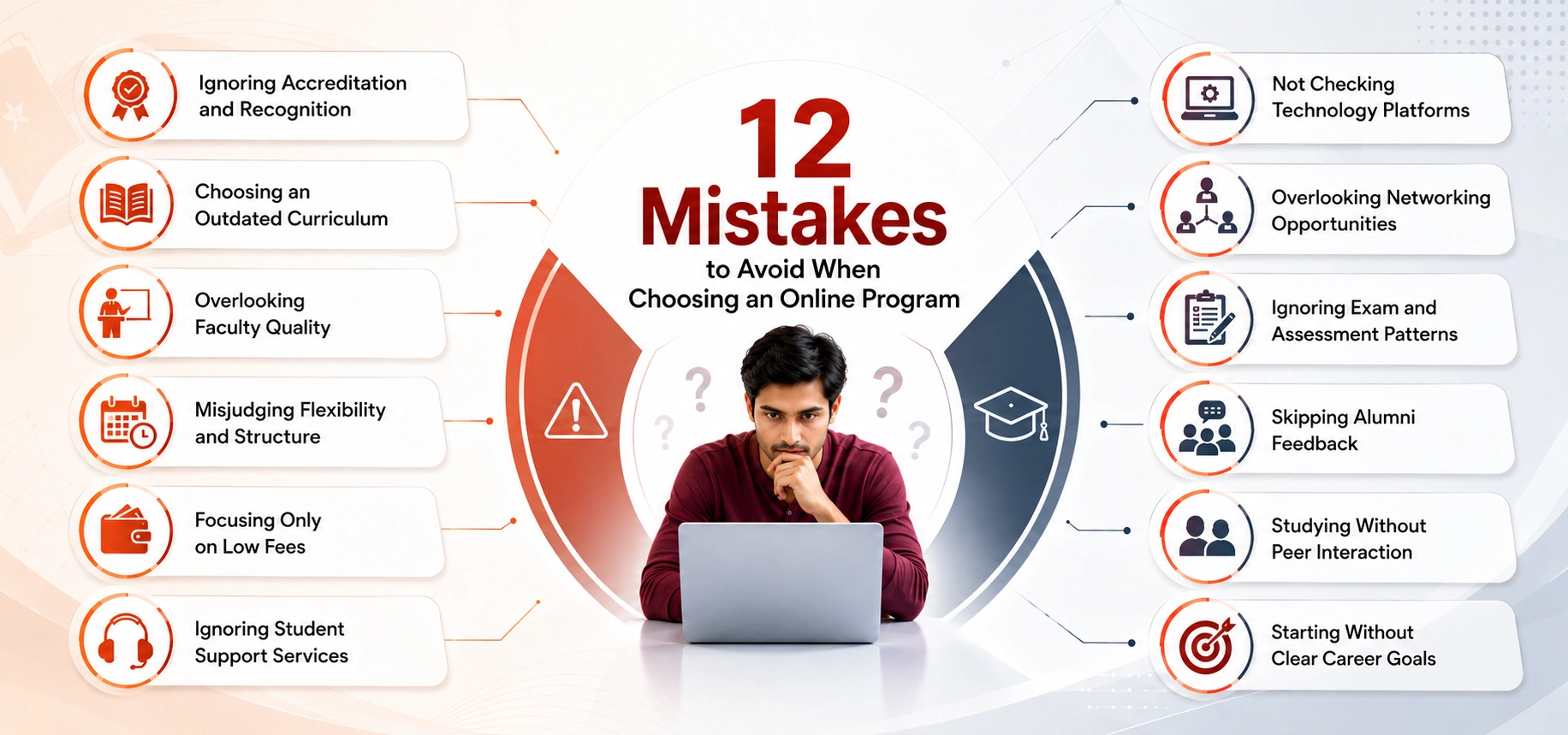
1. Overlooking Accreditation and Official Recognition
Accreditation is the foundation of a legitimate online program. No matter how attractive the course structure or fee looks, a degree without recognition holds little value in the job market.
Why This Mistake Happens
Students often assume that all online programs offered by established institutions are automatically recognised. Others get attracted to flashy marketing and don’t verify the credentials.
What You Should Do
Always verify:
- UGC-DEB approval (for Indian online degrees)
- NAAC/AICTE relevance depending on the discipline
A recognised program safeguards your degree’s value and makes you eligible for higher studies, competitive exams, and professional opportunities.
2. Ignoring Curriculum Relevance and Industry Alignment
A well-designed curriculum sets the tone for your entire learning experience. Many students choose programs based solely on popularity instead of depth, relevance, or job-market alignment.
Warning Signs of a Weak Curriculum
- Outdated topics
- Lack of industry projects
- No exposure to modern tools or software
- Pure theory without application
What You Should Look For
- Updated modules mapped to current industry needs
- Case studies, simulations, and assignments
- Training on tools used in modern workplaces
- Capstone projects or hands-on assessments
A relevant curriculum not only enhances your learning but also strengthens your employability.
3. Neglecting Faculty Expertise and Teaching Quality
In online education, good faculty are not just instructors-they are your mentors, academic anchors, and bridges to industry knowledge.
Red Flags
- Faculty with limited industry exposure
- No live interaction opportunities
- Lack of clarity on who teaches the modules
What You Should Check
- Academic background and real-world experience
- Accessibility through discussion forums or live classes
- Student reviews mentioning teaching effectiveness
The quality of faculty significantly impacts how well you understand complex concepts and apply them in real-life settings.
4. Misjudging the Flexibility vs. Structure Ratio
Flexibility is a key advantage of online education, but too much freedom can lead to inconsistency, missed deadlines, and low retention.
The Common Trap
Learners assume “flexibility” means “study anytime”, but unstructured models can lead to procrastination.
What You Should Look For
- Predictable academic calendar
- Balanced mix of self-paced and live sessions
- Weekly or monthly assessments
- Structured learning pathways
An online program should offer independence without compromising academic discipline.
5. Choosing Based Solely on Fees Instead of ROI
A low fee may appear attractive, but it should never be the deciding factor.
Why This Mistake Happens
Students often prioritise budget over long-term value, unaware that a well-recognised, industry-backed program yields significantly higher returns.
How to Evaluate ROI
- Placement record
- Alumni outcomes
- The program’s reputation
- Access to industry partnerships
- Skill development opportunities
A slightly higher investment often results in better opportunities, stronger recognition, and higher career growth.
6. Not Checking Student Support and Academic Assistance
Online learning requires support systems that substitute the physical campus environment. Unfortunately, many learners realize this late.
Essential Support Services to Look For
- Academic advisors
- Technical support
- Career guidance
- Placement preparation
- Student communities or peer groups
- Mental well-being resources
Strong support enhances retention, helps navigate challenges, and improves overall learning satisfaction.
7. Ignoring Technology Requirements and Platform Quality
Your entire learning journey depends on the digital infrastructure of the institution.
Risks of Poor Platforms
- Interrupted classes
- Loss of notes or assignments
- Slow portals
- Difficult exam interfaces
What You Should Ensure
- Mobile and desktop compatibility
- Intuitive navigation
- Stable live-class streaming
- Dashboard for tracking progress
- Secure exam proctoring tools
A trial session or demo class helps assess platform usability before committing.
8. Underestimating Networking and Career Development Opportunities
Many students believe networking happens only on physical campuses-this is far from true.
Online programs with strong networking components provide:
- Alumni interaction
- Virtual meetups
- Industry-led webinars
- Mentorship programs
- Internship and placement support
Choose programs that enable meaningful professional relationships beyond academics.
9. Not Understanding Exam Patterns and Assessment Structure
Every program evaluates students differently. Failing to check assessment formats may lead to unexpected challenges later.
Questions You Must Clarify
- Is the exam proctored?
- Are assessments project-based or exam-heavy?
- What is the weightage of quizzes, assignments, and finals?
- Are there re-exam options?
- Is the exam fully online or partly offline?
Transparent assessment methods ensure fairness and help you prepare effectively.
10. Skipping Alumni Reviews and Authentic Feedback
Real student experiences are one of the most reliable indicators of program quality.
Where to Look for Reviews
- LinkedIn profiles
- Quora and professional forums
- YouTube testimonials
- Alumni networks
- Social media groups
Focus on detailed reviews, not overly glowing or overly negative ones.
11. Underestimating the Power of Peer Networking and Collaboration
Online learning does not mean learning alone. Students who engage with peers gain better clarity, accountability, and motivation.
Why It Matters
- Encourages problem-solving
- Builds communication skills
- Enhances understanding through shared perspectives
How to Apply It
Join study circles, participate in discussion boards, share resources, and schedule collaborative sessions for difficult topics.
12. Failing to Set Clear Academic and Career Goals
Without clear goals, learners often lose direction in online environments.
How to Avoid This
- Set weekly milestones
- Monitor your academic progress
- Use journals or apps for tracking
- Review your achievements monthly
- Adjust strategies when required
Goal-setting is the backbone of consistency and long-term success.
Also Read: Top 9 Online Degrees in India for a Future-Ready Career
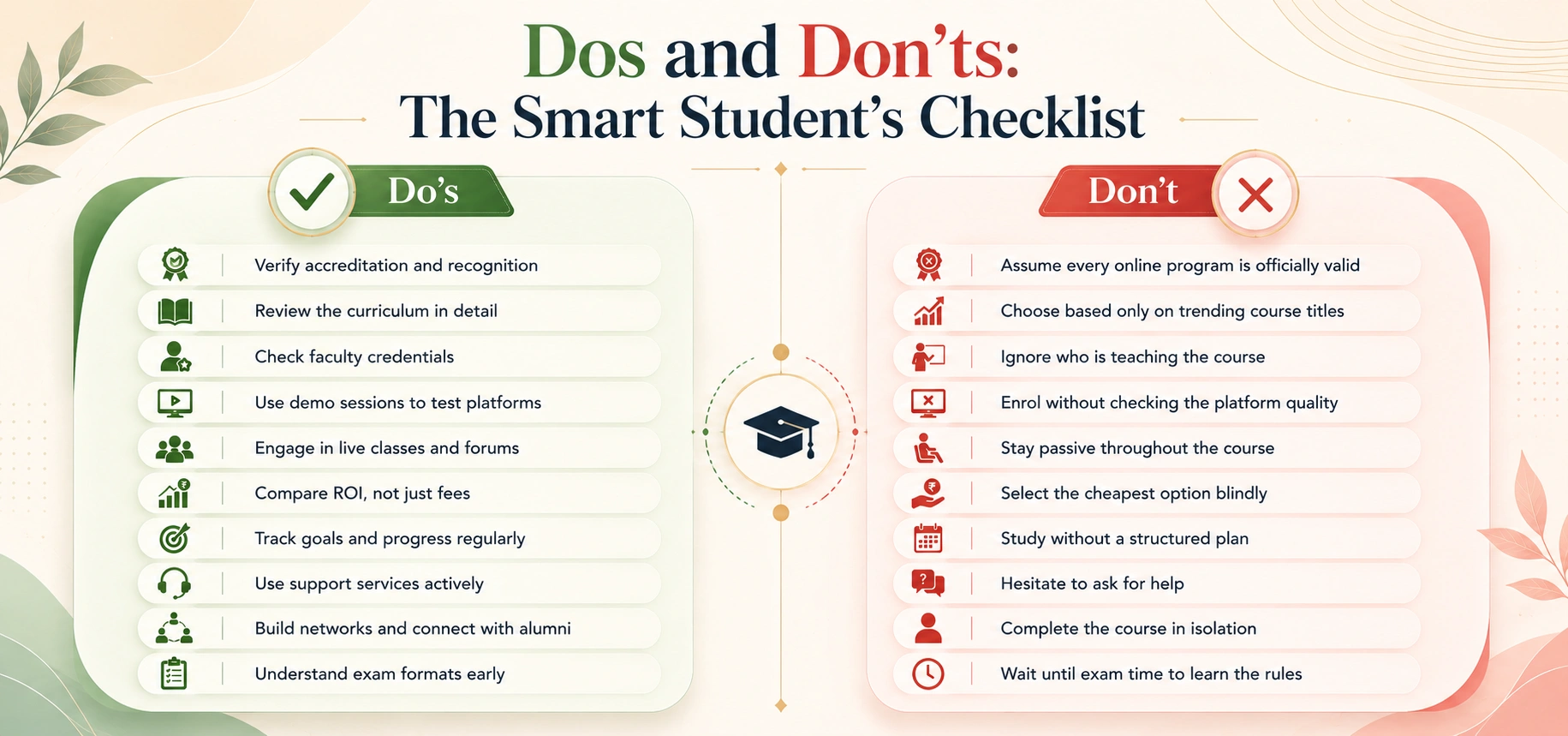
Conclusion: Your Decision Shapes Your Future
Choosing an online program is not just an academic decision-it is a career investment. The right program can expand your skillset, upgrade your career, and unlock opportunities across industries. The wrong one can set you back in time, money, and motivation.
By avoiding these mistakes and evaluating programs comprehensively, you position yourself for success in an increasingly competitive global job market.
Make decisions based on quality, credibility, and long-term value, not on convenience alone. When you choose wisely, online education becomes a powerful stepping stone to a stronger, more fulfilling future.