
Table of Content
It is funny how online certifications suddenly become very important... the moment you're about to apply for a job.
You open your resume to make a few changes and updates. Then you realise the last achievement you added was months or even years ago. And then the very next moment you begin searching for online certifications related to your field or relevant to the job. The fact that they are paid or free barely bothers you. What you are actually looking for is to tell the recruiters that you have not stopped learning.
The interesting part is that you are not alone. Millions of working professionals do exactly the same thing. And that behaviour expresses something much bigger about today’s job market.
Today, it is no longer the only point of evaluation where you have studied or worked. But also whether you have been upskilling yourself in every phase of your life. That's exactly why the benefits of online certifications go far beyond adding another credential to your resume.
They show that you have taken initiative, are adaptable and are willing to grow in today’s workplace.
Before We Talk About Certifications...
Answer these questions for yourself:
-
Have you updated or changed your resume in the last six months?
-
Is there a skill that your workplace or new job expects from you but you have not learned that yet?
-
Have you ever skipped a very good opportunity just because you do not meet every criterion or skill they require?
-
Have you ever looked at someone else's LinkedIn profile and thought, "I should probably learn that too."
-
If a recruiter asked, "What have you learned recently?", would you be able to answer this question?
If you nodded "yes" to even one of these questions, you have already started to understand the benefits of online certifications. They are no longer just about learning something new or relevant but to also stay connected to the latest skills in the job market.
What Recruiters Actually Notice
There is a very common misconception that recruiters get impressed when they see a certification on your resume. Instead they notice the psychology behind that certification. It tells them that you have been working on yourself and have been continually upskilling to make yourself fit in this diverse work environment.
But the important thing to understand is that this is not the only thing that will get you hired in any organization. Apart from this it is important for you to build your portfolio with certain projects, good experience, good communication skills and problem solving ability.
Also, it might be possible that some candidates might have a similar portfolio or qualifications. Herein, online certifications and new skills can upgrade your chances of getting hired.
Once you understand why recruiters value continuous learning, the next question becomes obvious…how do online certifications actually help your career?
What are the Benefits of Online Certifications
1. They Make Your resume Stronger
Let's be honest.
One of the reasons for anyone pursuing an online certification is that they want a strong and good resume and there is nothing wrong with it.
To understand that just imagine two candidates with similar degrees, similar experience and similar technical skills. One resume hasn't changed since graduation. The other reflects recent certifications relevant to the role.
Neither candidate is guaranteed the job. But one clearly communicates continuous growth.That's often the difference between blending in and standing out.
2. They Help You Learn Skills That Employers Actually Need
University gives you a strong academic foundation whereas the workplace expects something more.
It is not practically possible to wait for another degree as new technologies, AI tools, digital platforms, analytics software and automation continue to reshape industries every year. This can be fulfilled by learning one skill at a time.
Whether it is HR Analytics, Power BI, Python, Digital Marketing, Cloud Computing, SEO or even Project Management, online certifications help you fill the gap between education and current industry expectations.
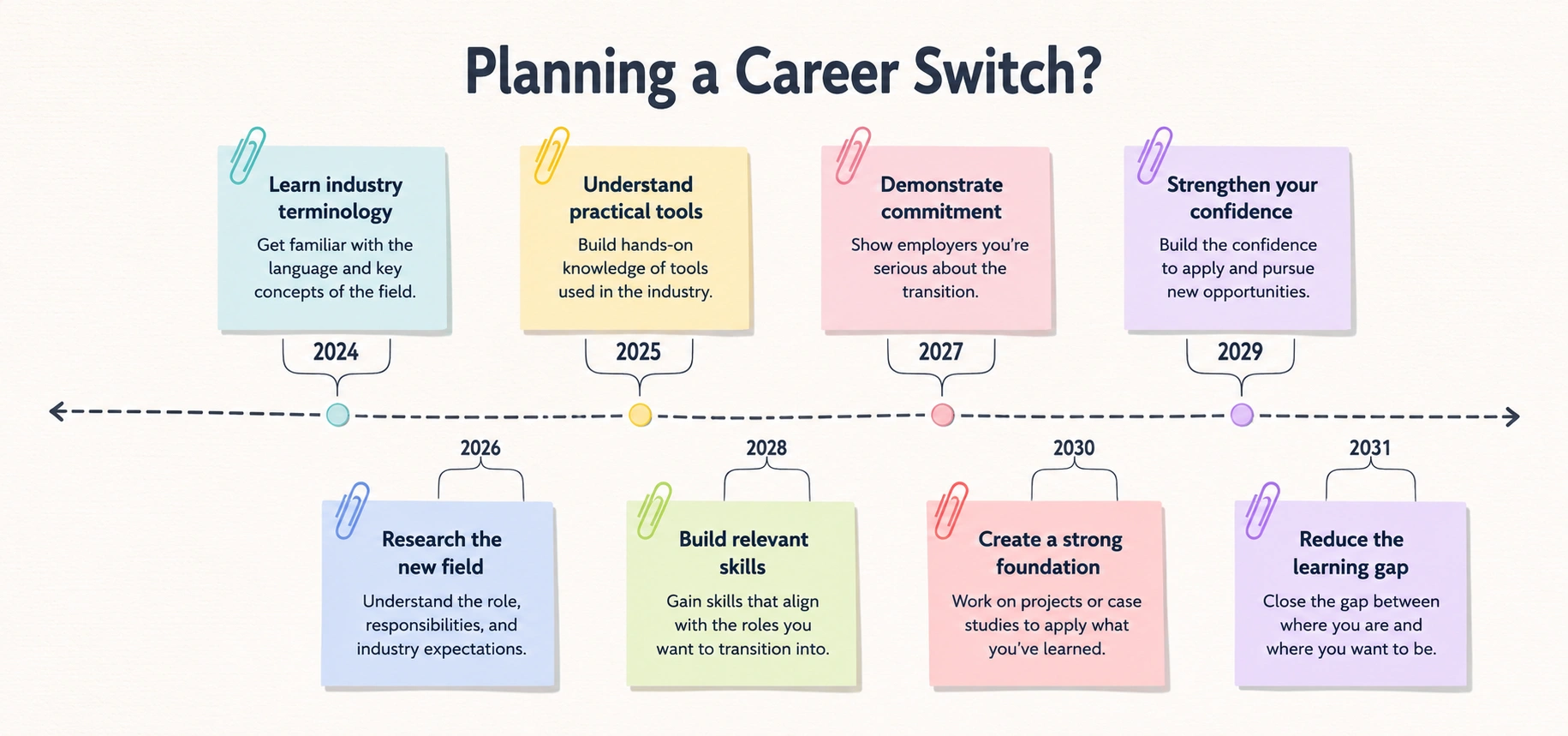
3. They Make Career Changes Simpler
Changing careers is definitely possible. The hard part is usually convincing employers you're ready for a change.
For example, if someone in customer support wants to move into Digital Marketing, getting certifications in SEO, Google Ads or Content Marketing can't replace experience. It shows they're making a real effort to learn the field before applying. The same goes for HR professionals learning HR Analytics or finance professionals exploring Data Analytics.
These certifications help employers see you're already preparing for the role.
4. They Give You Something to Discuss
In interviews, you might be asked, "Tell us about something new you've learned recently."
A certification lets you answer with confidence. You can explain why you chose it, what you learned, and how you used those skills in projects, internships, freelance work, or your current job.
This conversation often makes an impression than just listing another qualification.
5. They Build Confidence and Skills
Confidence is one of the benefits that people don’t often talk about. Learning something changes how you approach opportunities.
You become more willing to apply for roles, volunteer for projects, contribute in meetings or negotiate for better opportunities because you feel more prepared.
Sometimes the biggest career benefit isn't the certificate itself. It's the confidence that comes from knowing you're ready.
Here is a question that is really worth asking.
Are all certifications worth it? The answer is no.
Getting ten certifications that're not related to each other does not automatically make your profile stronger. In fact, it can sometimes give people the idea that you are just collecting certificates without actually becoming an expert in something.
To avoid this situation, ask yourself these questions before enrolling in any online certification:
-
Will this certification help me do my current job better?
-
Will it help me get the career I really want?
-
Will I actually use the skills I learn from this certification?
The best certification is not always the most expensive one. It is the one that helps you achieve your career goals.
Where can you get certifications?
One of the things about online learning is that there are so many good platforms to choose from. Depending on what you want to do, you can choose from university programmes, industry certifications or courses that teach you skills.
Some of the platforms that people know and trust include:
|
Platform |
Best For |
|
Coursera |
Google, IBM, Meta, Microsoft & university certifications |
|
edX |
Courses from Harvard, MIT, IITs, and global universities |
|
LinkedIn Learning |
Business, leadership, communication, Excel |
|
Udemy |
Practical skills like Python, Excel, Power BI, Digital Marketing |
|
Google Skillshop |
Google Ads & Google Analytics |
|
HubSpot Academy |
SEO, Content Marketing, CRM |
|
Microsoft Learn |
Azure & Microsoft technologies |
|
AWS Skill Builder |
Cloud Computing |
|
Great Learning Academy |
Free certifications in AI, HR, Data Science & Marketing |
|
Alison |
Free professional certification courses |
The platform certainly matters. But choosing a certification that's relevant to your career matters much more.
Conclusion
Online certifications are much more than another line on your resume. They help you stay relevant, build practical skills and show employers that you're committed to continuous learning. The key isn't collecting as many certificates as possible it's choosing the ones that genuinely support your career goals. Because in today's workplace, learning doesn't end after graduation and neither should your professional growth.